
Why Choosing the Right Roof Leak Repair Company Can Save You Thousands
Finding a reliable roof leak repair company is one of the most important decisions a homeowner can make — especially when water is already coming in. If you need a quick answer, here’s what to look for:
How to choose the best roof leak repair company:
- Licensed and insured — Always verify credentials before signing anything
- Local experience — Choose a contractor familiar with your region’s weather and building codes
- Written estimates — Get a clear, itemized scope of work before any repairs begin
- Warranties offered — Look for both workmanship guarantees and manufacturer-backed material warranties
- Emergency availability — A good company can respond fast when water is actively entering your home
- Transparent process — They should explain what’s wrong, show you the evidence, and tell you the fix
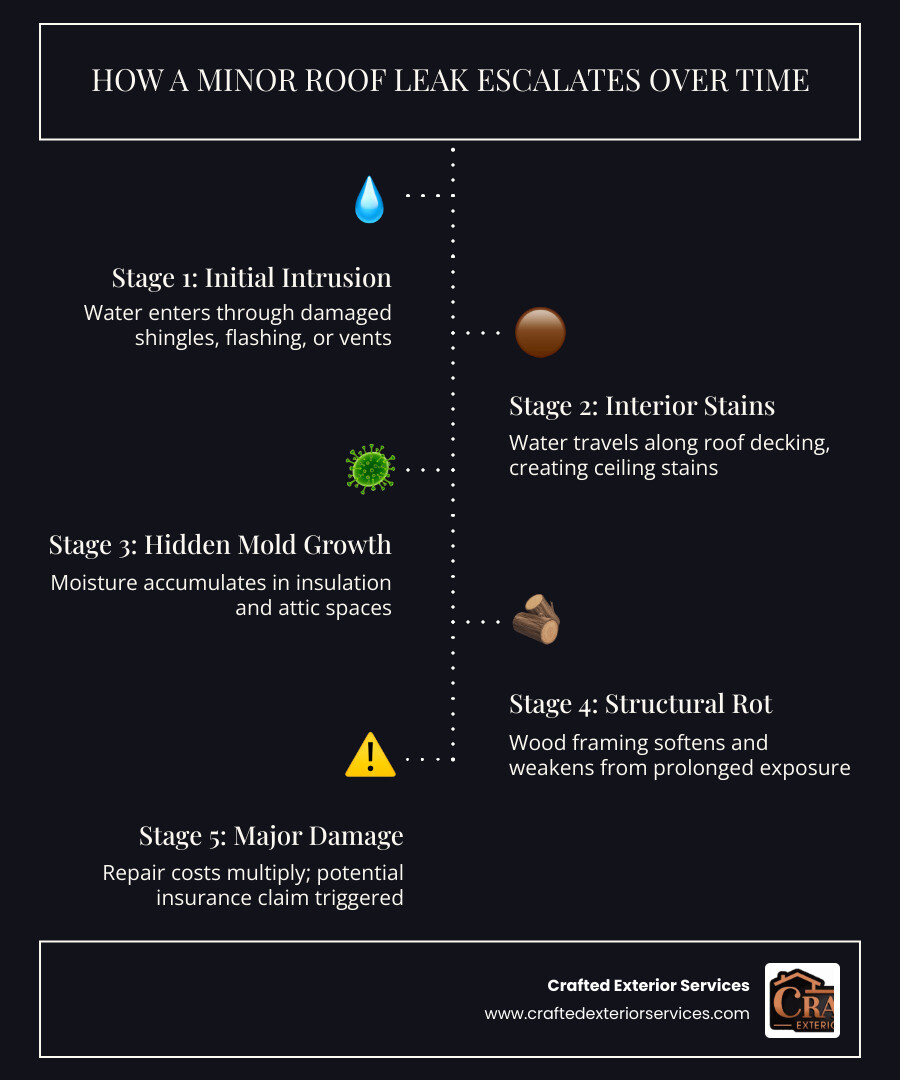
A roof leak rarely stays small. What starts as a faint water stain on your ceiling can quietly rot structural framing, fuel mold growth, and drive repair costs from a few hundred dollars into the thousands — sometimes tens of thousands.
According to industry data, roof leaks account for roughly 25% of all homeowners insurance claims each year. And homes with roofs older than 20 years are three times more likely to develop leaks than newer ones.
The good news? When caught early and fixed right, most leaks are straightforward repairs. The problem is that finding the true source of a leak — and fixing it permanently — takes skill, the right tools, and real roofing experience. Water travels. It can enter at one point and show up several feet away on your ceiling.
At Crafted Exterior Services, we’ve seen what happens when leaks go unaddressed or get patched incorrectly. This guide walks you through everything you need to know to find the right roof leak repair company, understand the repair process, and protect your home for the long term.
Common Causes and Early Signs of Roof Leaks
Understanding why roofs leak is the first step toward preventing catastrophic water damage. In our region—stretching from the humid summers and snowy winters of Martinsburg, WV, and Bunker Hill, WV, to the storm-swept hills of Hagerstown, MD—our roofs endure intense thermal expansion, heavy downpours, and freezing cycles.

Roofs are complex systems, and leaks rarely occur without a specific vulnerability failing. The most common physical causes of residential and commercial roof leaks include:
- Flashing Failure: Flashing is the thin metal installed to direct water away from critical areas where the roof meets a vertical surface, such as chimneys, walls, and skylights. Approximately 80% of all roof leaks are caused by improper flashing installation or deterioration in these areas.
- Clogged and Overflowing Gutters: When gutters are choked with leaves, pine needles, and debris, rainwater has nowhere to go. It pools at the roof’s edge, backs up under the shingles, and rots the wooden fascia boards and roof decking.
- Age-Related Wear and Tear: As roofing materials age, they lose their flexibility. Asphalt shingles shed their protective granules, curl, crack, and become brittle. A roof over 20 years old is three times more likely to leak than a younger system.
- Severe Storm Damage: High winds can lift or completely tear shingles away, while hail punctures protective underlayments. If you suspect wind or hail has compromised your roof, look for the 10 signs your roof needs immediate attention to catch issues before they rot your ceilings.
- Compromised Vent Boots: The rubber seals around plumbing vent pipes degrade rapidly under constant UV exposure, cracking and allowing water to run straight down the pipe into your attic.
To ensure your home remains fully protected, professional contractors adhere to rigorous industry guidelines, such as the GAF certified leak detection standards, which outline precise diagnostic procedures for identifying these exact failure points.
Why You Need a Professional Roof Leak Repair Company Immediately
If you discover water entering your home, the clock is ticking. A roof leak is a progressive emergency that never resolves itself. Within 24 to 48 hours of water exposure, wood rot begins to soften structural rafters and ceiling joists, compromising the structural integrity of your home.
Furthermore, damp, dark attics are prime breeding grounds for toxic mold and mildew. Mold spores can spread through your HVAC system, creating severe respiratory hazards for your family.
A professional roof leak repair company should be contacted immediately to dry-in the structure and prevent these secondary forms of damage. Acting quickly also preserves your eligibility for insurance coverage, as many insurance companies deny claims if they determine the homeowner failed to take prompt action to mitigate the water damage.
How to Identify Early Signs of a Leak Before Disaster Strikes
You do not have to wait for water to drip onto your living room floor to know you have a leak. In fact, professional inspections can identify up to 90% of potential leak issues before they cause visible interior damage. Homeowners should perform regular indoor walk-throughs and look for these early warning signs:
- Water Stains: Discolored, tea-colored patches on your ceilings or running down your interior walls.
- Active Mold Growth: Unexplained musty odors in the attic, or dark spots appearing on ceiling drywall and upper wall corners.
- Damp Walls or Peeling Paint: Bubbling drywall tape, peeling wallpaper, or paint that feels damp to the touch near rooflines.
- Attic Inspection Clues: Shine a flashlight along your attic rafters during a heavy rainstorm. Look for dark water tracks, rusted nails, damp insulation, or areas where light shines through the roof deck.
How a Professional Roof Leak Repair Company Diagnoses and Fixes Leaks
Locating a leak is often harder than fixing it. Water is incredibly deceptive; it obeys gravity but travels the path of least resistance. It can penetrate a cracked shingle on the peak of your roof, run down a rafter for ten feet, drop onto your attic floor, and finally pool above your bedroom ceiling.

A reputable roof leak repair company does not rely on guesswork or apply a “band-aid” patch to the spot directly above your ceiling stain. Instead, professionals utilize advanced diagnostic tools, including moisture meters and infrared thermal imaging cameras, to trace the exact pathway of water intrusion back to its root cause.
Because water retains heat differently than dry building materials, thermal imaging allows technicians to see damp pathways trapped behind drywall or beneath roof membranes without tearing your home apart.
| Repair Type | Description | Durability | Best For |
|---|---|---|---|
| Temporary Tarping | Heavy-duty plastic tarp secured with wooden furring strips to prevent immediate water entry. | Short-term (Days to Weeks) | Active storms, emergency dry-ins, waiting on insurance adjusters. |
| Permanent Repair | Removal of damaged materials, replacement of underlying wood decking, and installation of new underlayment, flashing, and shingles. | Long-term (Lifespan of the Roof) | Resolving the root cause of the leak permanently. |
The Step-by-Step Professional Repair Process
When you hire a certified professional, you should expect a systematic approach designed to solve the problem permanently. A standard, high-quality repair process follows these steps:
- Attic-First Diagnostic Inspection: The technician starts inside your attic, checking the underside of the roof deck for mold, damp wood, or rusted nails to locate where water is entering.
- Exterior Visual Tracking: The roofer inspects the corresponding area on the exterior roof surface, checking for damaged shingles, cracked vent boots, or lifted flashing.
- Source Isolation & Clear Scope: The technician documents the damage on video or photo to show you the exact cause and provides a written scope of work before any repairs begin.
- Deconstruction of the Damaged Area: The roofer removes the surrounding shingles and underlayment to expose the bare wood deck, ensuring no hidden rot is left behind.
- Deck and Underlayment Replacement: Any rotted wood is replaced. A high-performance ice and water shield is installed directly over the wood deck, followed by heavy-duty underlayment.
- Material Matching and Installation: New shingles or metal panels are installed using high-quality materials that match your existing roof’s aesthetic and color.
- Post-Repair Verification: The team conducts a final quality check to ensure the repaired area is completely water-tight.
For comprehensive diagnostics and lasting peace of mind, always work with a team that provides structured roof repair services backed by experienced, non-subcontracted crews.
Material-Specific Repair Approaches for Different Roof Types
Different roofing materials require vastly different repair techniques. A one-size-fits-all approach will inevitably fail:
- Asphalt Shingles: This is the most common residential material. Repairs involve carefully breaking the sealant bond on surrounding shingles, removing the nails of the damaged shingle, slipping in a matching replacement, and nailing and sealing it in place.
- Standing Seam Metal: Metal roofs are highly durable but can leak at the fasteners, seams, or transitions. Repairs involve replacing degraded neoprene washers, tightening loose panels, or applying specialized, manufacturer-approved metal sealants.
- Flat Roof Membranes (TPO, EPDM, Modified Bitumen): Flat roofs are highly susceptible to ponding water and seam separation. Repairing flat systems requires cleaning the membrane thoroughly, reinforcing compromised seams, and heat-welding or chemically bonding a matching patch over punctures.
- Tile Roofs: Common in historical or custom homes, tile repairs require specialized training. Technicians must carefully slide out broken clay or concrete tiles, inspect and replace the deteriorated waterproof underlayment beneath them, and install new tiles without cracking the surrounding ones.
To ensure your repairs meet the highest engineering standards, technicians should follow CertainTeed residential roofing specifications or equivalent manufacturer guidelines for your specific material.
Understanding Roof Repair Costs, Warranties, and FAQs
One of the first questions every homeowner asks is: How much is this going to cost?
The average cost to repair a minor roof leak ranges from $150 to $400. However, if a leak has gone unnoticed for months, the resulting water damage to structural wood, drywall, and insulation can easily push total restoration costs over $5,000 to $10,000.
When deciding how to allocate your budget, it is critical to evaluate whether patching the roof is a sound investment or a temporary waste of money. Consulting a guide on how to tell when it’s time to fix or replace your roof can help you make an informed financial decision.
Key Factors That Influence Your Repair Estimate
No two roof repairs are identical. Your estimate will be calculated based on several distinct variables:
- Extent of the Damage: A simple leak around a single pipe boot is much cheaper to fix than a valley leak that has rotted out three sheets of plywood decking.
- Roofing Material Type: Asphalt shingles are highly affordable to repair. Specialty materials like standing seam metal, slate, or concrete tile require specialized labor and more expensive replacement materials.
- Roof Pitch (Steepness): Extremely steep roofs require specialized safety harnesses, scaffolding, and slower, more meticulous labor, which increases the overall cost.
- Local Permit Requirements: In many municipalities within West Virginia and Maryland, minor “like-for-like” repairs do not require building permits. However, if structural components like rafters or substantial portions of the roof deck must be replaced, a permit will be required, adding to the administrative cost.
What Warranties Should a Reputable Roof Leak Repair Company Offer?
A warranty is only as good as the company that stands behind it. When comparing estimates, look for two distinct types of coverage:
- Workmanship Warranties: This covers the physical labor of the repair. Reputable local contractors will offer a dedicated workmanship guarantee on their repairs, ensuring that if the exact same leak returns within a specified period, they will fix it at zero cost to you.
- Manufacturer Warranties: If your repair involves replacing a large section of roofing, ensure the materials used are covered by manufacturer warranties. Certified contractors can often offer extended material warranties that uncertified handymen cannot provide.
Frequently Asked Questions About Roof Leak Repairs
Q: Can a roof leak repair company find a leak even if it is not currently raining?
A: Yes. Experienced professionals do not need an active rainstorm to find a leak. By starting with an attic inspection to look for dry water stains, wood rot, or mold, and utilizing moisture scanners and thermal imaging, they can trace the water path even in dry conditions.
Q: Does homeowners insurance cover roof leak repairs?
A: It depends on the cause of the leak. Insurance typically covers “sudden and accidental” damage, such as a tree limb falling on your roof during a storm or high winds ripping shingles away. Insurance rarely covers gradual damage caused by neglect, lack of maintenance, or general wear and tear on an old roof.
Q: What is the difference between sudden and gradual damage?
A: Sudden damage is caused by a single, identifiable event (like a hail storm). Gradual damage happens slowly over time (like flashing slowly rusting through over ten years). This is why documenting storm damage immediately with photos and video is critical for successful insurance claims.
Q: How often should I have my roof inspected to prevent leaks?
A: We recommend a professional roof inspection at least once a year, preferably in the fall before winter weather hits. Regular maintenance, including gutter cleaning and checking flashing seals, is the single best way to maximize your roof’s lifespan. You can find more practical advice on extending the life of your roof to avoid premature replacement costs.
Emergency vs. Standard Roof Repairs: When to Call the Experts
Not all roof leaks are created equal. Some can wait for a scheduled appointment on a sunny Tuesday, while others require immediate, middle-of-the-night intervention.
If you are dealing with a standard leak—such as a small water stain on your ceiling that only drips during prolonged, heavy downpours—you can typically schedule a standard repair. However, if a severe storm has compromised your home’s structural integrity, you should contact an emergency roof repair service immediately.
When is Emergency Tarping Necessary?
Emergency services are required when water is actively and heavily pouring into your living space, threatening your safety, electrical systems, or valuable property. Common scenarios that demand emergency response include:
- Fallen Trees or Heavy Limbs: Large debris can puncture your roof deck, leaving wide-open holes exposed to the elements.
- Severe Wind Stripping: If high winds tear away large sections of shingles or metal panels, your underlayment will quickly fail under heavy rain.
- Structural Compromise: If your roof is sagging or bowing under the weight of water or storm debris, vacate the property and call professionals immediately.
In these situations, emergency crews will perform a “dry-in” by securing heavy-duty, weather-resistant tarps over the damaged areas. This stops the immediate water intrusion and stabilizes your home until weather conditions allow for a permanent storm damage roof repair.
The Dangers of DIY Roof Repair vs. Hiring a Licensed Contractor
It can be tempting to grab a ladder and a tube of roofing caulk to try and fix a leak yourself. However, DIY roof repair is highly discouraged for several critical reasons:
- Extreme Safety Hazards: Roofs are steep, slippery, and dangerous. Professional roofers undergo rigorous safety training and utilize specialized harnesses, ladders, and fall-arrest systems. A single slip can result in catastrophic, life-altering injuries.
- Voiding Your Warranties: Many roofing manufacturers will completely void their material warranties if repairs are performed by unlicensed individuals using unapproved methods.
- Improper Flashing Installation: DIYers often try to seal leaking flashing with roof cement or caulk. This is a temporary patch that traps moisture beneath the metal, accelerating wood rot. Correctly repairing flashing requires removing surrounding shingles, installing new metal, and weaving it properly into the shingle courses.
- Insurance Non-Compliance: Insurance adjusters require professional documentation and certified repairs. If you attempt a DIY fix, your insurer may deny future claims related to that area of the roof.
Conclusion: Protect Your Home with Crafted Exterior Services
Your roof is your home’s primary line of defense against the elements. When a leak occurs, partnering with a professional, highly rated roof leak repair company is the only way to ensure your family, belongings, and property remain safe and dry.
At Crafted Exterior Services, we do not believe in short-term patches or high-pressure sales tactics. We are a non-franchise, locally owned team of exterior home service specialists based right here in Martinsburg, WV. We serve our neighbors throughout Bunker Hill, WV, and Hagerstown, MD, with honest pricing, manufacturer-approved products, and full insurance coverage.
When you choose us, you get:
- Root-Cause Diagnostics: We find the real source of your leak using advanced inspection techniques.
- Zero-Down Financing: High-quality roof repairs should not have to wait for your next paycheck.
- Local Expertise: Our crews are company employees—not random subcontractors—fully trained to handle our region’s unique climate challenges.
Do not let a small drip turn into a major disaster. If you suspect your roof has a leak, contact our local team today to schedule your professional inspection, or visit our roof repair services page to learn more about how we can protect your home for the long haul.