Is a Metal Roof Over Old Shingles Actually a Smart Move?
Can you install a metal roof over asphalt shingles? Yes — and it’s more common than most homeowners realize. Installing metal roofing directly over an existing layer of asphalt shingles is a widely accepted, code-compliant practice that saves homeowners between $1,000 and $3,000 in tear-off labor and disposal fees alone.
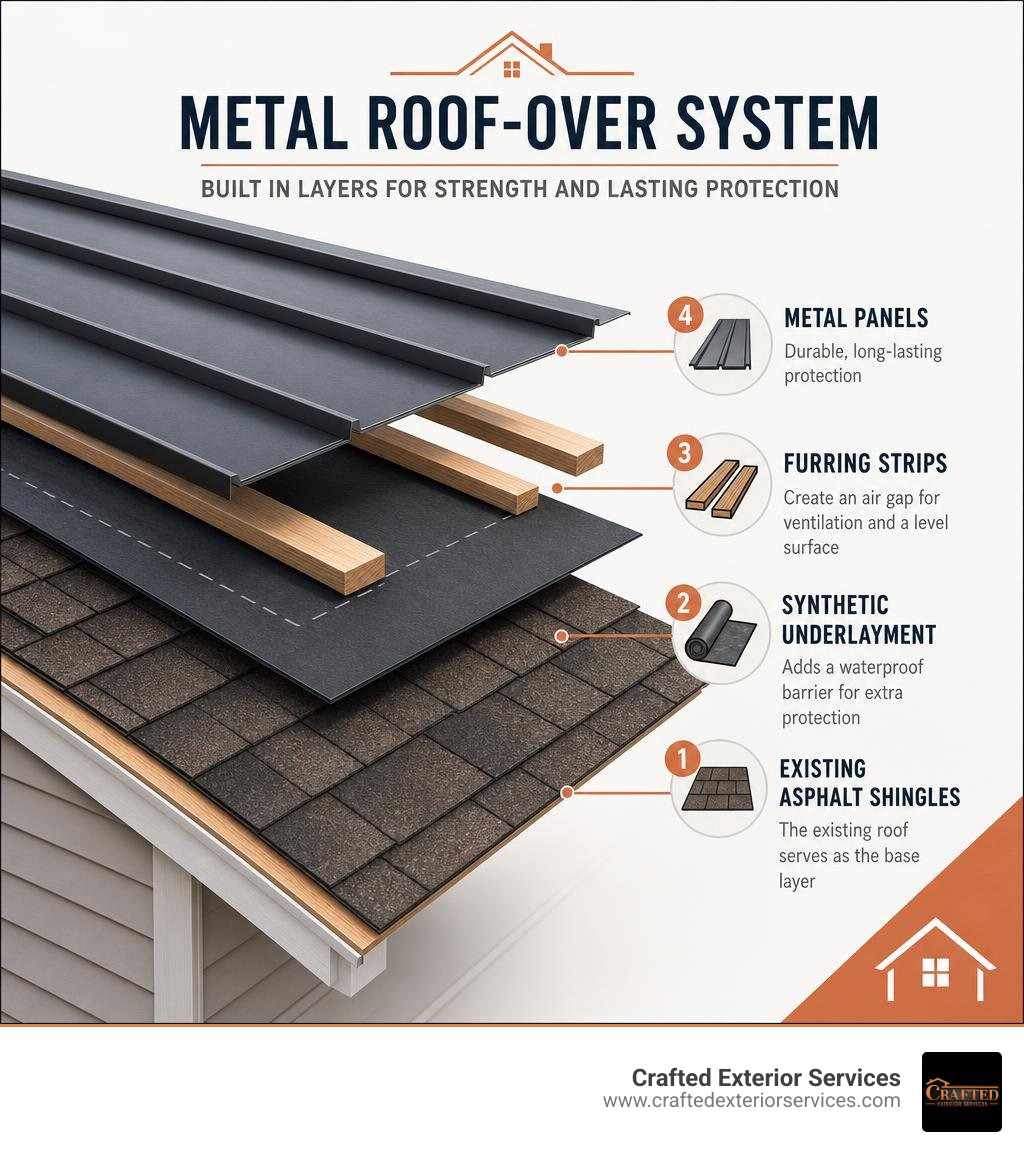
This approach is called a “roof-over” (or overlay). Instead of stripping your old shingles down to the bare deck, a contractor installs new metal panels on top — with proper underlayment and framing in between.
If you’re dealing with an aging roof in the Martinsburg, WV area, the trusted local roofing contractors at Crafted Exterior Services can assess whether your home is a good candidate.
Here’s a quick answer to the most common questions:
| Question | Quick Answer |
|---|---|
| Is it legal? | Yes, in most U.S. jurisdictions — if only one shingle layer exists |
| Will it last? | 40 to 70 years, same as a standard metal roof |
| How much can you save? | $1,000–$3,000 in tear-off costs; 20–30% overall project savings |
| Is the roof stronger after? | Yes — metal adds durability without significant structural load |
| Is it always the right choice? | No — deck rot, sagging, or two existing layers mean you need a tear-off |
There are real trade-offs to understand before you decide. The sections below walk through everything — building codes, structural requirements, material choices, warranties, and when a full tear-off is actually the smarter call.
Can You Install a Metal Roof Over Asphalt Shingles? The Core Feasibility
You can install a metal roof directly over asphalt shingles, provided the existing roof structure is sound and local building codes permit it. To determine if your home is a prime candidate for a roof-over, you must evaluate two primary factors: the physical weight of the materials and the local building codes governing your area.
Understanding Weight and Structural Load
Many homeowners worry that adding a second roof layer will cause their ceiling to sag or, worse, collapse. However, metal is incredibly lightweight.
To put this in perspective:
- Asphalt shingles are heavy, weighing between 230 and 400 pounds per square (a “square” is a 100-square-foot area).
- Metal roofing panels are exceptionally light, weighing only 50 to 150 pounds per square.
Because metal panels weigh roughly one-third of what asphalt shingles do, adding a metal roof over a single layer of shingles only increases the total weight of your roof by about 1 to 1.5 pounds per square foot. Most residential roof structures in West Virginia and Maryland are engineered to easily support this minor addition, even when accounting for winter snow loads in places like Martinsburg, WV and Hagerstown, MD.
Navigating Local Building Codes
Before committing to an overlay, you must verify code compliance. Most jurisdictions in the United States follow the International Residential Code (IRC).
According to IRC Section R907.3, no more than two layers of any roofing material may be applied to a residential structure. If your home currently has only one layer of asphalt shingles, adding a metal roof as the second layer is legally permitted. However, if your roof already has two layers of shingles, a complete tear-off down to the bare wood deck is legally required before any new roofing can be installed.
For more details on how these materials match up structurally and financially over time, check out our comparison on Asphalt Shingles vs Metal Roofs: Which is Better?. Additionally, you can consult CertainTeed’s guide on metal roof installations to see how major manufacturers view structural deck requirements.
Weighing the Pros and Cons of a Metal Roof-Over
Choosing to install a metal roof over your existing shingles is a strategic decision. While it offers immediate financial and environmental perks, it also introduces certain long-term risks that you must carefully weigh.
| Feature / Factor | Metal Roof-Over (Overlay) | Full Tear-Off & Replacement |
|---|---|---|
| Upfront Cost | Lower (Saves $1,000 – $3,000 on labor/dump fees) | Higher (Includes labor to strip & dispose) |
| Installation Time | Faster (Saves 1 to 2 days of disruptive labor) | Slower (Requires stripping, cleaning, & repairing) |
| Landfill Waste | Minimal (Keeps old shingles out of landfills) | High (Contributes to construction waste) |
| Deck Inspection | Blind (Cannot see or repair underlying wood) | Complete (100% visibility to replace rotted decking) |
| Expected Lifespan | 40 to 70 years | 40 to 70 years |
| Energy Efficiency | High (Boosted by double insulation/air gap) | High (Standard reflective performance) |
The Pros: Why Homeowners Choose an Overlay
- Substantial Cost Savings: By skipping the labor-intensive process of tearing off old shingles and paying local landfill disposal fees, you can reduce your overall project budget by 20% to 30%.
- Less Disruption: A complete tear-off is loud, messy, and can take several days. An overlay typically shaves 1 to 2 days off the installation time, meaning less disruption for your family, pets, and neighbors.
- Eco-Friendly Choice: Asphalt shingles are a massive environmental burden, accounting for roughly 11 million tons of landfill waste annually. Leaving your shingles in place keeps them out of the landfill and acts as an extra layer of insulation.
- Remarkable Energy Efficiency: Metal roofs reflect solar radiant heat instead of absorbing it. When installed with an air gap over old shingles, a metal roof can save a homeowner up to 40% on summer cooling costs.
The Cons: The Risks of Leaving Shingles in Place
- Hidden Deck Damage: This is the single biggest risk. If your roof deck has soft spots, water damage, or dry rot, covering it up with metal does not fix the problem. In fact, hidden deck damage occurs in roughly 23% of homes with shingle roofs over 15 years old. If you install heavy metal over rotted wood, you risk structural failure down the road.
- The “Sandpaper Effect”: Asphalt shingles are coated in rough, abrasive granules. If metal panels are installed directly on top of shingles without a proper underlayment buffer, the natural expansion and contraction of the metal panels (which can shrink and grow by inches during seasonal temperature swings) will rub against the shingles. Over time, this abrasive friction can wear away the protective backing of the metal, leading to premature rust and leaks.
- Future Repair Complexity: If a leak does eventually develop, locating its source is twice as difficult because the water has to travel through the metal panels, around the underlayment, and through the old shingle layer before it finally drips into your attic.
To dive deeper into the technical standards of metal roofing systems, you can explore the Metal Roofing Alliance (MRA) technical resources.
Technical Requirements and Preparation for a Successful Installation
To avoid the pitfalls of a roof-over, the installation must be executed with technical precision. You cannot simply throw metal sheets over old shingles and call it a day.
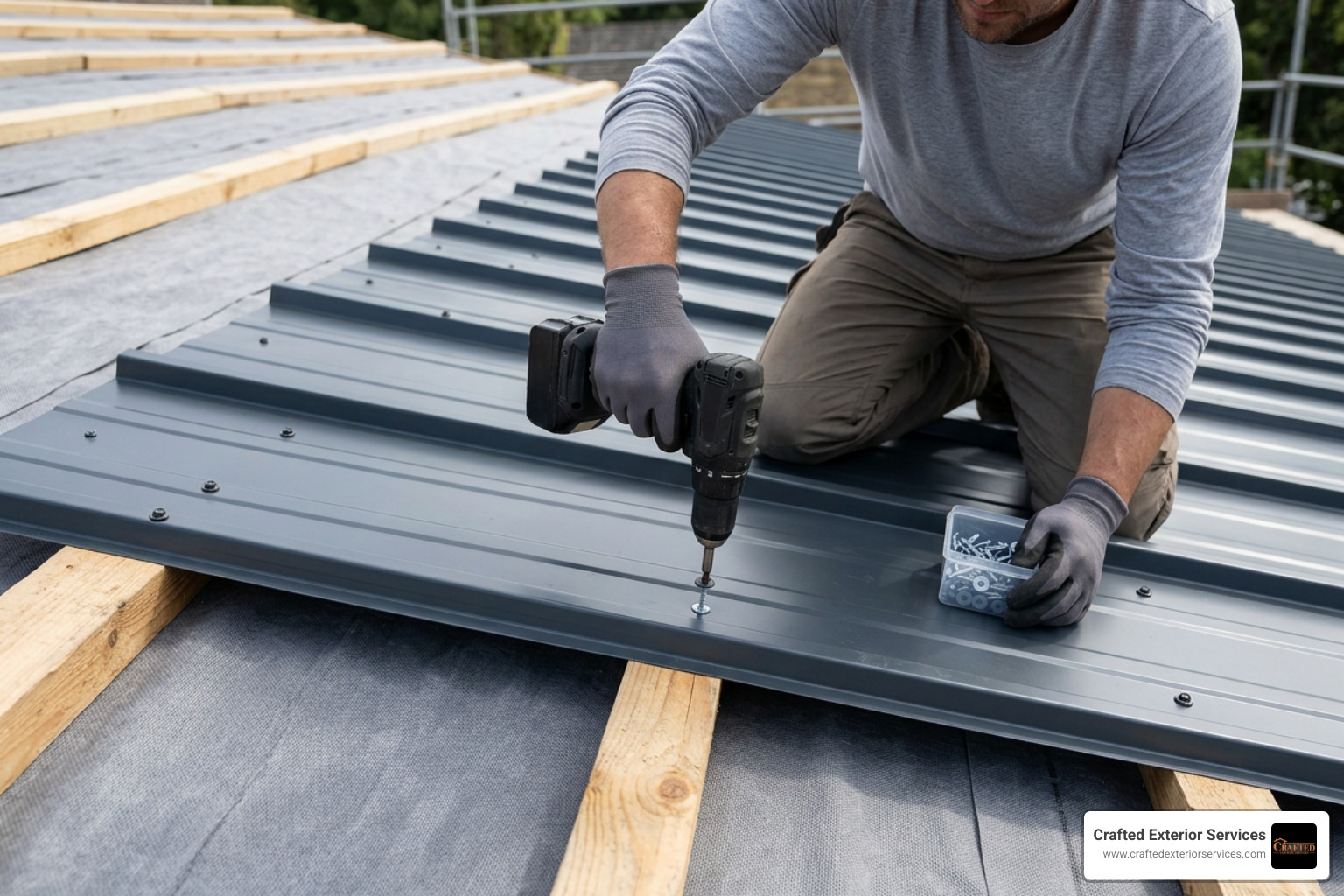
Two primary installation methods exist for a metal roof-over:
- Direct Attachment with Underlayment: A new, high-performance underlayment is rolled directly over the old shingles to act as a protective barrier, and the metal panels are fastened directly through the shingles into the wood decking below.
- Furring Strips / Purlins (The Gold Standard): Wood framing strips (usually 1x4s) are nailed down over the shingles, and the metal panels are fastened to these wooden strips. This creates an invaluable air gap between the old roof and the new metal panels.
Using a purlin system creates Above-Sheathing Ventilation (ASV). This air gap acts as a thermal break, allowing heat to escape before it reaches your home’s interior, while also preventing condensation from getting trapped between the two roofs. For high-wind areas like Bunker Hill, WV, using a robust framing system like this is highly recommended. You can learn more about premium metal profiles on our Standing Seam Metal Roofing service page.
How to prepare shingles before you install a metal roof over asphalt shingles
A successful overlay requires a clean, flat, and stable foundation. Homeowners and contractors must complete several critical preparation steps:
- Thorough Cleaning: Remove all moss, algae, leaves, and debris from the old shingles. Trapping organic matter beneath your new roof will lead to mold growth and wood rot.
- Secure Loose Tabs: Any curled, cupped, or loose shingles must be nailed down flat. If a shingle is severely damaged or missing, it should be replaced so the surface remains level.
- Cut Back the Edges: Cut away the old shingles from the eaves and gable edges of the roof. This allows the new metal drip edges and flashing to sit flush against the fascia boards, preventing water from blowing up underneath the metal panels.
For detailed industry standards on preparing asphalt surfaces, refer to the Asphalt Roofing Manufacturers Association (ARMA) guidelines.
Choosing the right materials when you install a metal roof over asphalt shingles
The longevity of your overlay depends heavily on the quality of the barrier materials you place between the old shingles and the new metal panels:
- Synthetic Underlayment: Standard organic felt paper degrades quickly under the extreme heat generated by metal panels. A high-quality synthetic underlayment is highly recommended because it resists tearing, repels water, and stands up to high temperatures.
- High-Temp Self-Adhered Underlayment: For valleys, eaves, and critical penetration points (like chimneys and pipes), use a self-adhering, high-temperature ice and water shield. This material seals tightly around fasteners to prevent leaks.
- Galvanic Isolation: When different metals come into contact in the presence of moisture, they can corrode each other through a process called galvanic corrosion. Ensure that all fasteners, flashing, and panels are made of compatible metals (such as using stainless steel or coated fasteners specifically designed for your metal panel type).
To explore the various metal gauges and materials available for your home, visit our main Metal Roofing page.
Warranties, Insurance, and Long-Term Value Impacts
Before pulling the trigger on a roof overlay, you must understand how it affects your financial protection and your home’s overall value.
Impact on Warranties
A common concern is whether a roof-over will void your manufacturer’s warranty. The answer depends entirely on the brand of metal panels you choose and the installation method.
Many top-tier metal manufacturers explicitly permit overlay installations and will fully honor their material warranties (which typically range from 30 to 50 years)—but only if their specific installation guidelines are followed. This usually includes installing a approved synthetic underlayment or a purlin system. If a contractor cuts corners or skips the underlayment, the manufacturer will likely void the warranty.
Workmanship warranties from your contractor are equally important. A reputable local contractor will warrant their labor, but they will not cover leaks caused by the failure of the old, underlying shingle roof or rotted decking they were unable to inspect.
Homeowners Insurance and Wind Mitigation
Your insurance company’s reaction to a roof-over can vary. In wind-prone areas of West Virginia and Maryland, some insurers may offer premium discounts or wind mitigation credits for upgrading to a Class A fire-rated, impact-resistant metal roof.
However, because the old shingles are left in place, an insurance inspector cannot physically verify the condition or fastening pattern of the wood deck underneath. In some cases, this can limit the maximum wind mitigation credits you can receive. Always call your local insurance agent to discuss how a roof-over will affect your policy before signing a contract.
Boosting Resale Value
A metal roof is a premium upgrade that significantly boosts curb appeal and home value. According to the JLC Cost vs. Value Report, homeowners typically recoup roughly 48% to 60% of a metal roof’s installation cost at resale.
A metal roof installed over sound shingles will have a lifespan of 40 to 70 years—the exact same as a metal roof installed after a complete tear-off. Buyers love the low-maintenance durability of metal, but to ensure smooth sailing during a future home inspection, keep all documentation, permits, and warranty certificates proving the overlay was done professionally and to local code. To learn more about how a new roof protects your financial investment, read about our complete Roof Replacement Services.
When to Choose a Full Tear-Off Over a Roof-Over
While a roof-over is a fantastic budget-saver, it is not a universal solution. There are several scenarios where choosing a roof-over is a dangerous gamble, and a full tear-off is the only sensible choice.
If your roof deck is soft or sagging, installing metal panels over it is like building a mansion on quicksand. The fasteners will not hold securely in rotted wood, meaning a strong storm could easily rip the metal panels right off your house.
Furthermore, if your shingles are severely buckled, warped, or curling, they will create an uneven, bumpy surface. Trying to install metal over a lumpy roof will result in a highly visible, wave-like distortion across your beautiful new metal panels (a phenomenon known as “telegraphing”).
While a full tear-off adds $1,000 to $3,000 in immediate labor and disposal costs, it is the gold standard of roofing. It allows your contractor to inspect every inch of the wood decking, replace rotted boards, install a seamless ice and water barrier directly to the wood, and guarantee the absolute structural integrity of your home for the next half-century. For more practical advice on preparing your home and family for a major roofing project, explore our New Roof Installation Tips to Keep Your Sanity Intact.
Frequently Asked Questions About Metal Roof-Overs
Will a metal roof overlay make my house louder in the rain?
No. This is one of the most persistent myths about metal roofing. Many people assume a metal roof will sound like a tin barn during a rainstorm.
In reality, when a metal roof is installed over an existing layer of asphalt shingles, the shingles act as a highly effective acoustic barrier. Combined with your home’s roof decking, attic space, and fiberglass ceiling insulation, the sound of rain on a metal roof-over is virtually indistinguishable from rain falling on standard asphalt shingles.
Does installing metal over shingles trap condensation and cause rot?
It can if the roof is installed incorrectly, but it is easily prevented with proper installation techniques. When warm, humid air from your home rises into the attic and hits a cold metal roof, condensation can form on the underside of the metal panels.
If the metal is installed directly against the shingles without a barrier, that moisture can get trapped, leading to mold and deck rot. To prevent this, professional roofers use furring strips to create a ventilated air gap (Above-Sheathing Ventilation) or install a high-quality, vapor-permeable synthetic underlayment that allows the roof to breathe. You can read more about moisture dynamics in the Metal Construction Association (MCA) condensation study.
How long does a metal roof last when installed over shingles?
A professionally installed metal roof overlay will last between 40 and 70 years. Because metal is highly resistant to fire, wind, hail, and pests, its lifespan is not shortened by being installed over shingles, provided the underlying structure is dry, ventilated, and structurally sound at the time of installation.
Conclusion
Installing a metal roof over your existing asphalt shingles is a highly effective, code-compliant way to upgrade your home’s durability while saving thousands of dollars in labor and landfill fees. However, its success hinges entirely on the current health of your roof deck and the technical expertise of your installers.
At Crafted Exterior Services, we are a locally owned, non-franchise exterior home services team based right here in Martinsburg, WV. We specialize in providing manufacturer-approved roofing solutions tailored to the unique climate of West Virginia and Maryland. We offer zero-down financing options and carry full insurance coverage to give you absolute peace of mind.
Don’t guess about the health of your roof deck. Let our experienced team perform a comprehensive inspection to determine if a metal roof-over is the right fit for your home.
Ready to explore your roofing options? Contact us today to schedule your professional roof assessment!
Local Service Areas:
- Roofing Services in Martinsburg WV
- Roofing Services in Hagerstown MD
- Roofing Services in Chambersburg PA
To view our full range of premium metal systems, visit our Pillar Page CTA: Metal Roofing Services page.