Your Roof Has a Deadline — Here’s How to Find the Right Local Roofer Before It Hits
Finding reliable roofers in the area is one of the most important decisions a homeowner can make — and one of the easiest to get wrong.
The average asphalt shingle roof lasts 20 to 25 years. In the Mid-Atlantic region, that timeline often gets cut short. Heavy snow loads, high winds, and humidity work together to accelerate wear faster than most homeowners expect. By the time a leak shows up on your ceiling, the damage is usually already weeks or months old.
If you’re in Martinsburg, WV or the surrounding area, you need a contractor who understands local conditions, handles insurance claims, and stands behind their work. That’s exactly what the team at Crafted Exterior Services is built to do — full home exterior services from inspection to final cleanup, no guesswork.
Here’s a quick look at what to look for when comparing local roofers:
- Valid state contractor’s license — verify it before signing anything
- General liability insurance — protects your property if something goes wrong
- Workers’ compensation coverage — protects you from liability if a worker is injured on your roof
- Manufacturer certifications (GAF, Owens Corning, CertainTeed) — unlocks better warranties and proves installation training
- Local physical address — a red flag if they can’t provide one
- Written, itemized estimate — not a vague single-number bid
- References from recent local jobs — not just star ratings, but real conversations
The rest of this guide breaks down how to vet contractors, spot red flags, understand your material options, and navigate insurance claims — so you can make a confident decision without overpaying or getting burned.
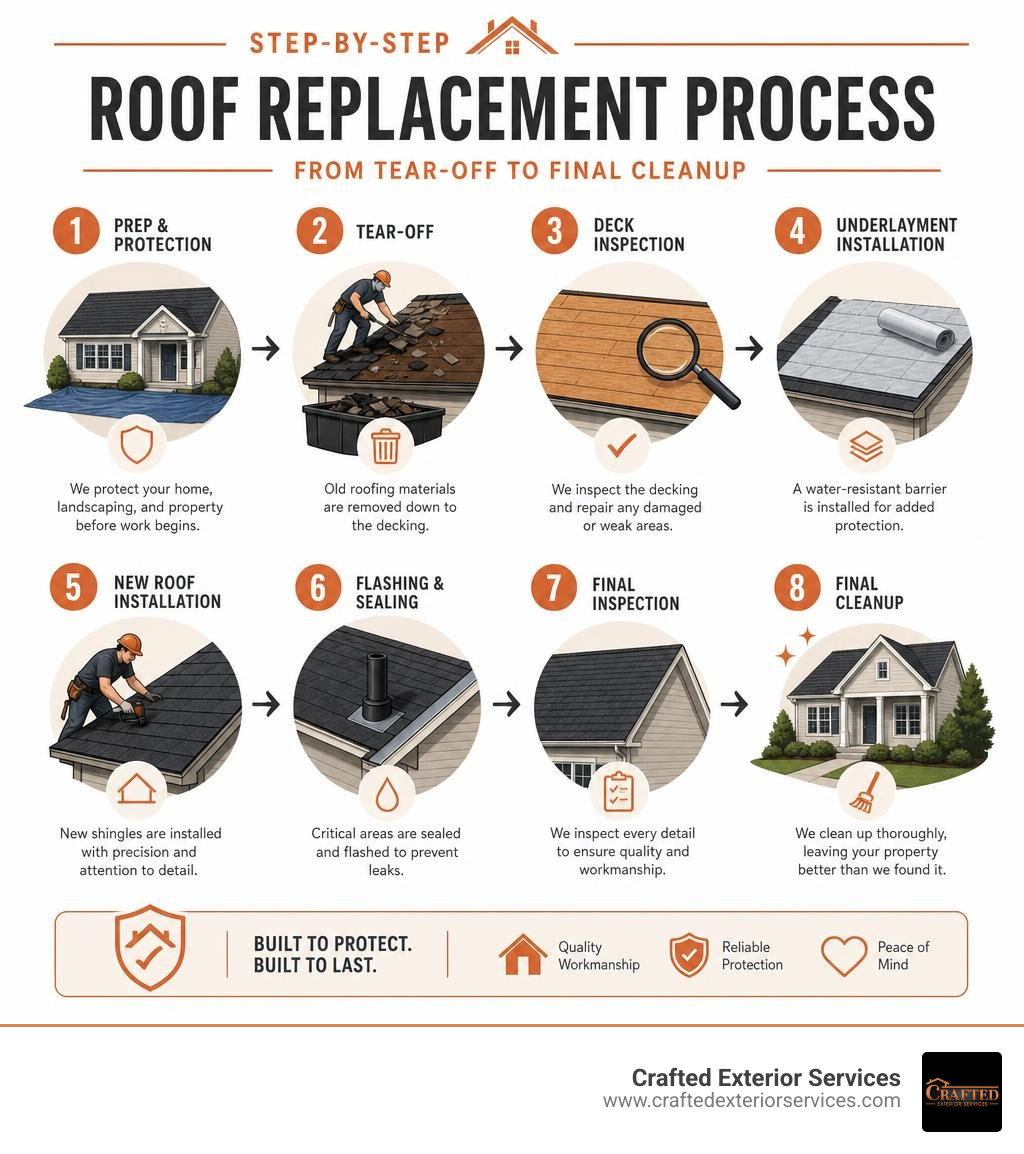
Related content about roofers in the area:
How to Find and Vet Reliable Roofers in the Area
To find a reliable roofing contractor in your area, you must verify their active state business license, confirm they hold at least $1 million in general liability insurance, and check that they carry workers’ compensation for every team member on your property. Never rely on verbal promises; a reputable contractor will gladly provide physical or digital copies of these certificates.
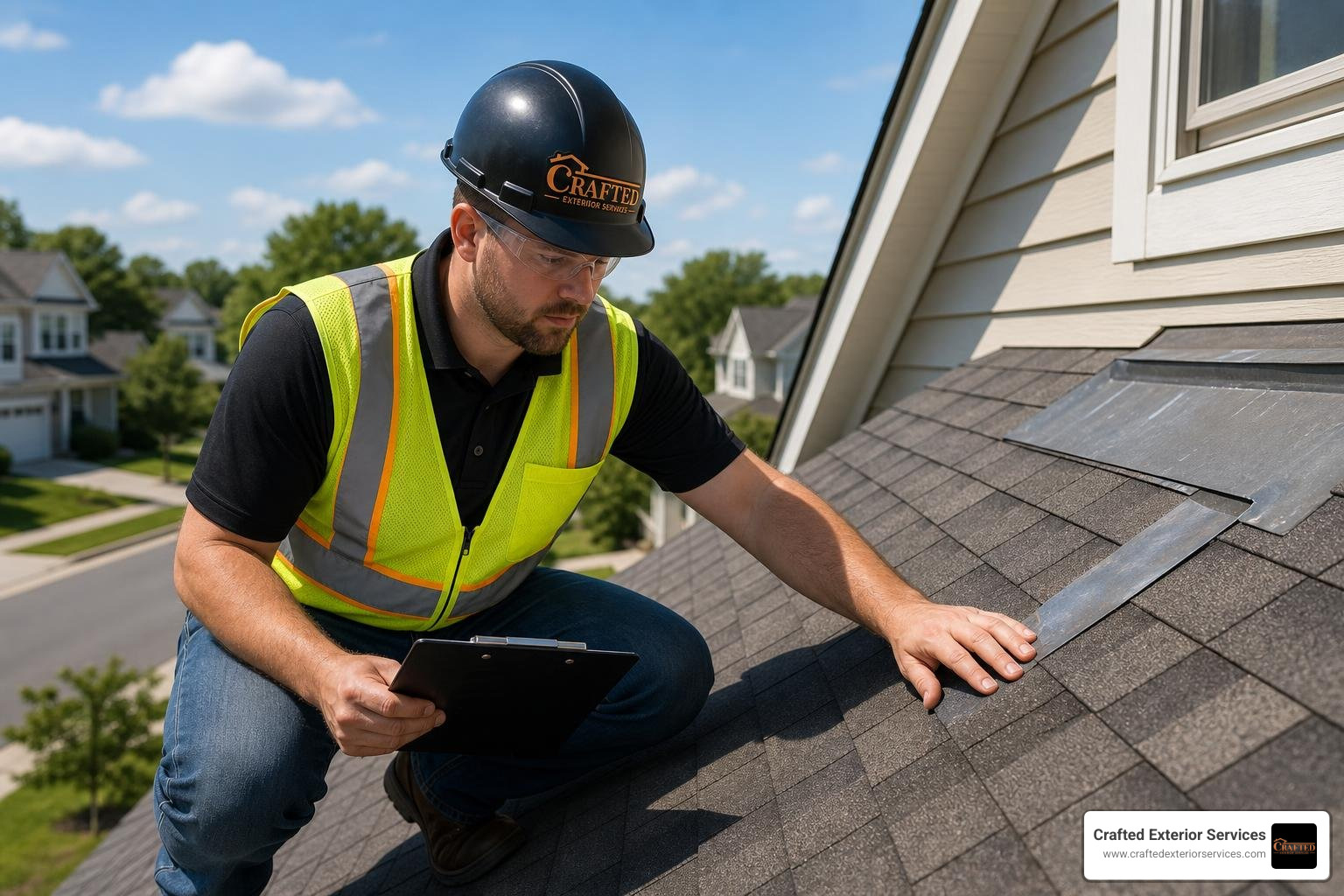
When you begin searching for local roofers in my area, the sheer volume of search results can feel overwhelming. Vetting them systematically is the only way to protect your investment.
Why Licensing and Insurance are Non-Negotiable
In West Virginia and Maryland, roofing contractors must be registered and licensed with the state. This is not just a formality. Hiring an unlicensed contractor leaves you with virtually no legal recourse if the project goes south.
Furthermore, general liability insurance protects your home from accidental structural damage during the tear-off or installation. Workers’ compensation is equally critical. If a roofer falls on your property and the contractor does not have active workers’ comp, you as the homeowner can be held financially liable for their medical expenses. Always ask for proof of both before allowing anyone to step onto your roof.
The Power of Manufacturer Certifications
The highest-quality roofers in the area carry manufacturer-backed credentials from top-tier brands like GAF, Owens Corning, and CertainTeed.
These certifications are not handed out to just anyone. For example, GAF-certified contractors must maintain high credit ratings, hold proper state licensing, show a history of excellent workmanship, and undergo continuous training.
Because GAF is North America’s largest roofing manufacturer, they trust their certified contractors to install premium products like Timberline HDZ® shingles. This certification allows us to offer enhanced system warranties that non-certified contractors simply cannot access.
Crucial Questions to Ask Potential Roofers in the Area
Before signing a contract, ask these four critical questions to ensure you are working with an ethical, professional crew:
- Do you use subcontractors, or is this your own employee crew?
- What does your workmanship warranty cover, and how long does it last?
- How will you protect my landscaping, driveway, and gutters during the project?
- What is your daily cleanup process, and do you perform a magnetic nail sweep?
Understanding what to look for before hiring prevents miscommunication down the line. Many national roofing franchises subcontract their labor to the lowest bidder. At Crafted Exterior Services, we believe in keeping things local and highly supervised.
Additionally, property protection is a key differentiator of professional crews. A standard roof replacement involves throwing thousands of pounds of heavy, sharp debris off your house. A reliable roofer will use specialized tarps, plywood barriers, and catch-all systems to protect your flowers, bushes, and siding.
Finally, a meticulous cleanup is mandatory. A professional crew will run high-powered magnetic nail sweepers over your yard and driveway multiple times to catch stray fasteners that could puncture tires or injure pets.
Red Flags to Avoid When Interviewing Roofers in the Area
The most dangerous red flags when hiring a roofer are demands for upfront payment in full, extremely low bids that seem too good to be true, and offers to “cover” or waive your homeowners insurance deductible.
Knowing how to spot honest local roofers keeps you safe from predatory practices. Here is what to watch out for:
- The “Storm Chaser” Phenomenon: After a major hail or wind storm in Martinsburg, WV or Hagerstown, MD, out-of-state roofing companies often flood the area. They knock on doors, offer “free” roofs, complete subpar work quickly, and disappear before you notice any leaks. Always choose a company with a permanent, physical local address.
- Upfront Payment Demands: A reasonable down payment for materials (typically 30% to 50%) is standard. Demanding 100% of the payment before a single shingle is delivered is a massive red flag.
- Deductible Fraud: If a contractor offers to cover, waive, or pay your insurance deductible, run the other way. This practice is highly illegal and constitutes insurance fraud. Both the contractor and the homeowner can face severe legal consequences.
- Vague Single-Figure Quotes: A professional quote should be fully itemized, detailing material brands, ventilation upgrades, permit costs, and labor terms.
Signs You Need a New Roof vs. Simple Roof Repair
You need a new roof replacement if more than 30% of your roof has sustained storm damage, if the shingles are curling, cracking, and losing their protective asphalt granules, or if the system is over 20 years old with active, recurring leaks. Simple repairs are sufficient for localized damage, such as a few shingles blown off during a single wind storm or minor flashing leaks around a chimney.
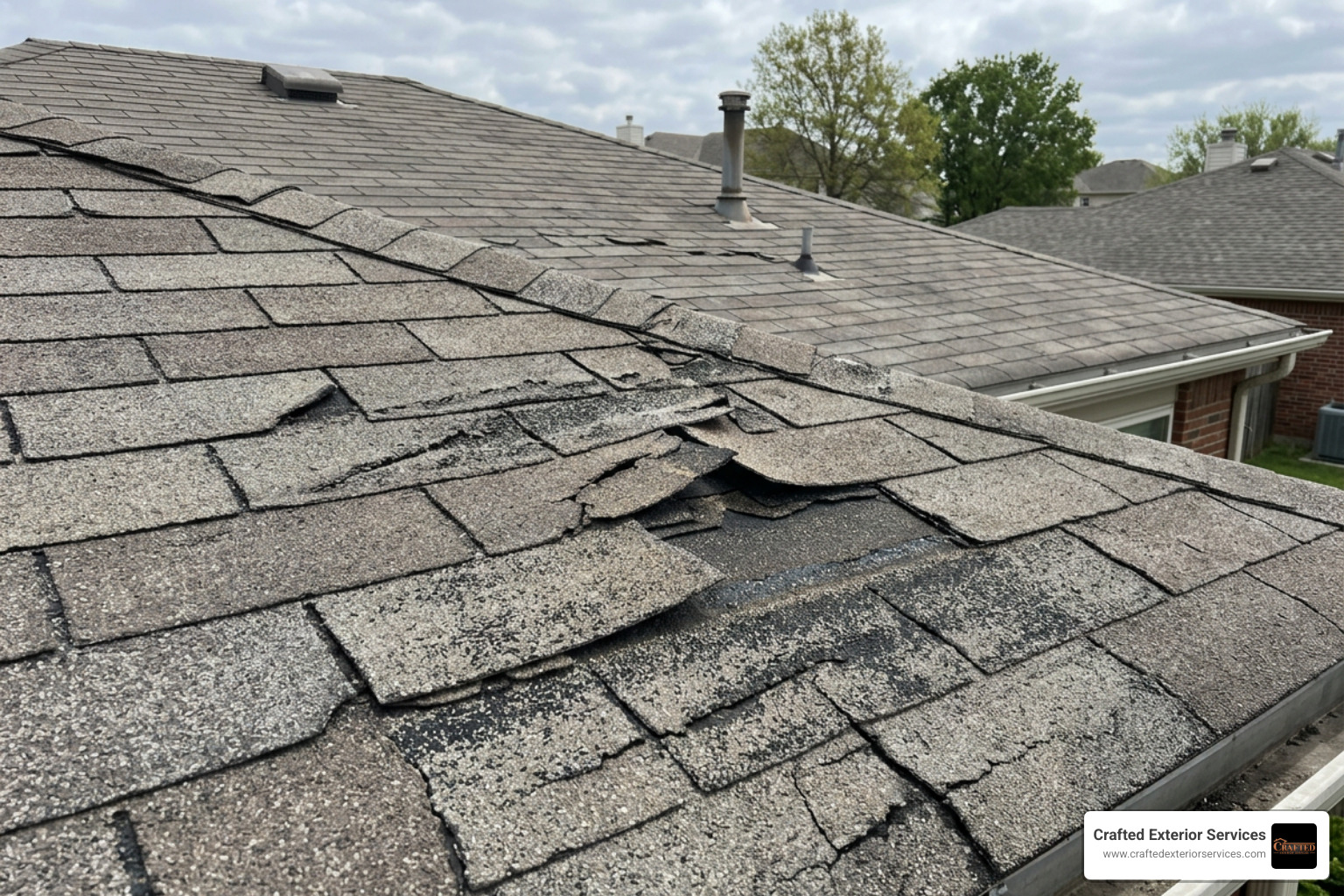
When you notice a spot on your ceiling, your first instinct might be panic. However, not every leak requires a complete roof replacement. Knowing the 7 signs you need roof repair can help you decide whether a targeted fix or a full overhaul is the most cost-effective path.
- Shingle Granule Loss: Check your gutters. If you see piles of dark, sand-like granules, your shingles are shedding their protective UV coating. This means they are nearing the end of their functional lifespan.
- Curling or Clawing Shingles: When shingles curl upward at the edges or buckle in the middle, they are no longer flat enough to seal out wind-driven rain.
- Water Stains and Soft Spots: Water stains on your attic rafters or upper-level ceilings indicate active penetration. If your roof deck feels soft or bouncy when walked on, the underlying plywood is rotting and must be replaced.
- Active Storm Damage: High winds can tear shingles completely off, leaving the waterproof underlayment exposed. If you experience severe weather, utilizing emergency roof repair services immediately is vital to prevent catastrophic interior water damage.
Understanding the Lifespan of Different Roofing Materials
The material you choose for your home directly dictates its longevity, wind resistance, and overall return on investment. While traditional asphalt shingles remain the most popular choice, metal systems are rapidly gaining traction in West Virginia and Maryland due to their extreme durability.
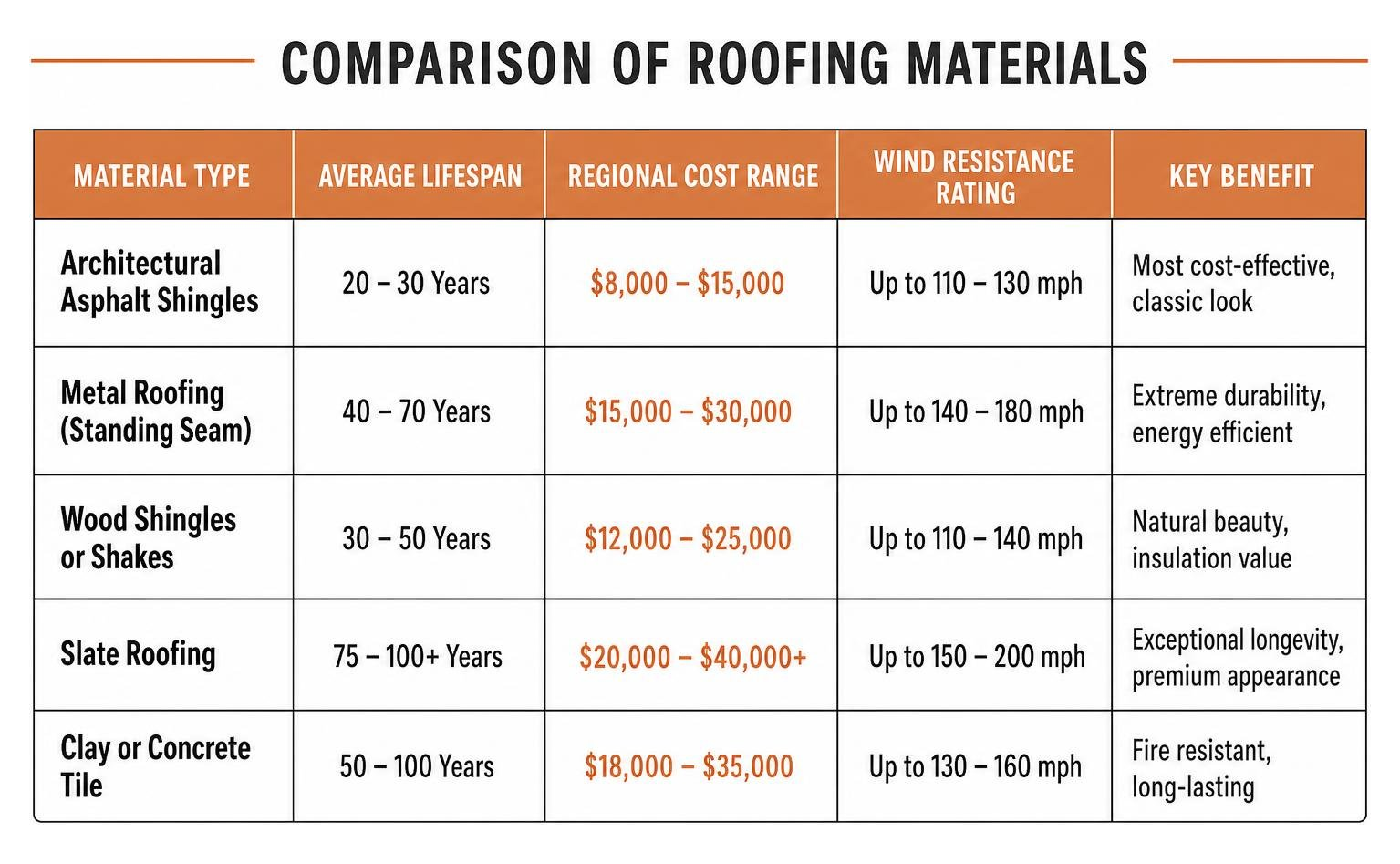
When deciding between materials, it is helpful to look at how they perform over time. Here is an original data table comparing the most common residential options in our region:
| Material Type | Average Lifespan | Regional Cost Range | Wind Resistance Rating | Key Benefit |
|---|---|---|---|---|
| Architectural Asphalt Shingles | 20 – 30 Years | $8,000 – $15,000 | Up to 110 – 130 mph | Most cost-effective, classic look |
| Standing Seam Metal | 40 – 70 Years | $18,000 – $35,000 | Up to 140+ mph | Maximum durability, low maintenance |
| Modified Bitumen (Flat Roofs) | 15 – 20 Years | $6,000 – $12,000 | Excellent | Great for low-slope or porch areas |
If you are looking for long-term peace of mind, exploring standing seam metal roofing is highly recommended. Metal sheds snow easily, resists algae growth, and can last up to three times longer than traditional materials.
However, if budget is your primary concern, modern asphalt shingle roofing remains an outstanding option when installed by a certified crew who understands proper attic ventilation.
Navigating Roofing Costs, Warranties, and Insurance Claims
A professional roof replacement in the Mid-Atlantic region typically ranges from $8,000 to $22,000, which includes the cost of tearing off the old roof, replacing damaged decking, installing high-performance underlayment, and applying new shingles or metal panels.
When investing in a new roof, you are paying for two distinct things: the manufacturer’s material warranty and the contractor’s workmanship warranty.
According to the National Roofing Contractors Association standards, a roof is only as good as its installation. Even the most expensive shingle will fail prematurely if the roof lacks adequate intake and exhaust ventilation.
If your roof has been damaged by wind, hail, or falling trees, you will likely need to navigate a homeowners insurance claim. To ensure a smooth process, make sure to work with a team that specializes in storm damage roof repair.
How to Handle Storm Damage and Insurance Adjusters
Filing an insurance claim can be a stressful experience. To protect your home and maximize your claim, follow this proven step-by-step sequence:

- Document the Damage: As soon as it is safe to do so, take clear photos of any blown-off shingles, exposed underlayment, or fallen debris in your yard.
- Secure Emergency Tarping: Insurance policies require homeowners to take reasonable steps to prevent secondary damage. Utilizing emergency leak protection protects your home’s interior while your claim is being processed.
- Professional Inspection: Have a trusted local roofer inspect your roof. The national average cost of an independent professional roof inspection is around $235, but we provide comprehensive digital assessments to help you document your claim.
- Meet the Adjuster: When the insurance company sends their adjuster to your home, ensure your roofing contractor is present on-site. Professional roofers speak the adjuster’s language and will make sure all damage is documented using Xactimate — the industry-standard estimating software used by major insurance carriers.
Frequently Asked Questions About Local Roofing Services
How much does a new roof cost in the Mid-Atlantic region?
A new residential roof replacement in the Mid-Atlantic region typically costs between $8,000 and $22,000. The exact price depends on several factors, including the square footage of your roof, the pitch (steepness), accessibility, and the materials you select. Traditional architectural shingles sit at the lower end of this range, while premium standing seam metal systems sit at the higher end.
How long does a typical roof replacement take?
A standard residential roof replacement takes 1 to 2 days to complete. Extremely large or highly complex roofs with multiple valleys and steep pitches may take 3 to 4 days. Weather conditions, such as rain or freezing temperatures, can occasionally delay the project, as shingles require dry conditions to seal properly.
Can a roofing contractor pay my insurance deductible?
No, a roofing contractor cannot pay, waive, or rebate your homeowners insurance deductible. Doing so is illegal and constitutes insurance fraud in West Virginia, Maryland, and across the United States. State laws require homeowners to pay their designated deductible directly, and contractors must submit honest, accurate invoices reflecting the actual cost of the work completed.
Conclusion
Your roof is your home’s first and most critical line of defense against the elements. When comparing roofers in the area, look beyond the cheapest price and focus on finding a contractor who offers real value: local ownership, proper credentials, and manufacturer-backed warranties.
At Crafted Exterior Services, we do things differently. We are a non-franchise, locally owned team based in Martinsburg, WV, serving our neighbors in Bunker Hill, WV, and Hagerstown, MD. We use only manufacturer-approved products, carry comprehensive liability and workers’ compensation insurance, and offer zero-down financing options to make your project as stress-free as possible.
Ready to protect your home with a roof built to last? Schedule a professional roof replacement with us today.