
What You Need to Know Before Replacing Your Roof in 2026
Roof replacement is one of the largest single investments most homeowners will ever make — and one of the least forgiving if you get it wrong.
For a typical single-family home, costs in 2026 range from $6,000 to $30,000, with a national average around $11,000 for an architectural asphalt shingle roof on a 2,000-square-foot house. Get three quotes, understand what drives the price, and you can avoid thousands in unnecessary spending.
Here is what this guide covers at a glance:
| Question | Short Answer |
|---|---|
| When do I need a replacement vs. repair? | When your roof is 20+ years old, has widespread damage, or repair costs exceed 30% of replacement cost |
| How much does it cost in 2026? | $6,000–$30,000 nationally; $7,500–$15,000 is typical for the Martinsburg, WV area |
| How long does it take? | 1–2 days for most asphalt shingle roofs; 3–5 days for larger or metal roofs |
| What materials are available? | Asphalt shingles, standing seam metal, slate, clay tile, synthetic composite |
| Does insurance cover it? | Yes — for sudden damage like wind or hail. No — for age-related wear and tear |
| What warranties should I expect? | Manufacturer product warranty + a matching labor/workmanship warranty from your contractor |
If your roof is showing serious warning signs — curling shingles, granule loss in gutters, water stains on ceilings, or daylight visible in the attic — the decision may already be made for you. The only real question is how to do it right, at a fair price, with a contractor you can trust.
That is exactly what this guide is built to answer. Whether you are dealing with storm damage or a roof that has simply reached the end of its life, Crafted Exterior Services helps homeowners in the Martinsburg area navigate every step — from the first inspection to the final warranty.
Read on for a full breakdown of costs, materials, timelines, insurance claims, and how to spot a contractor who will stand behind their work.
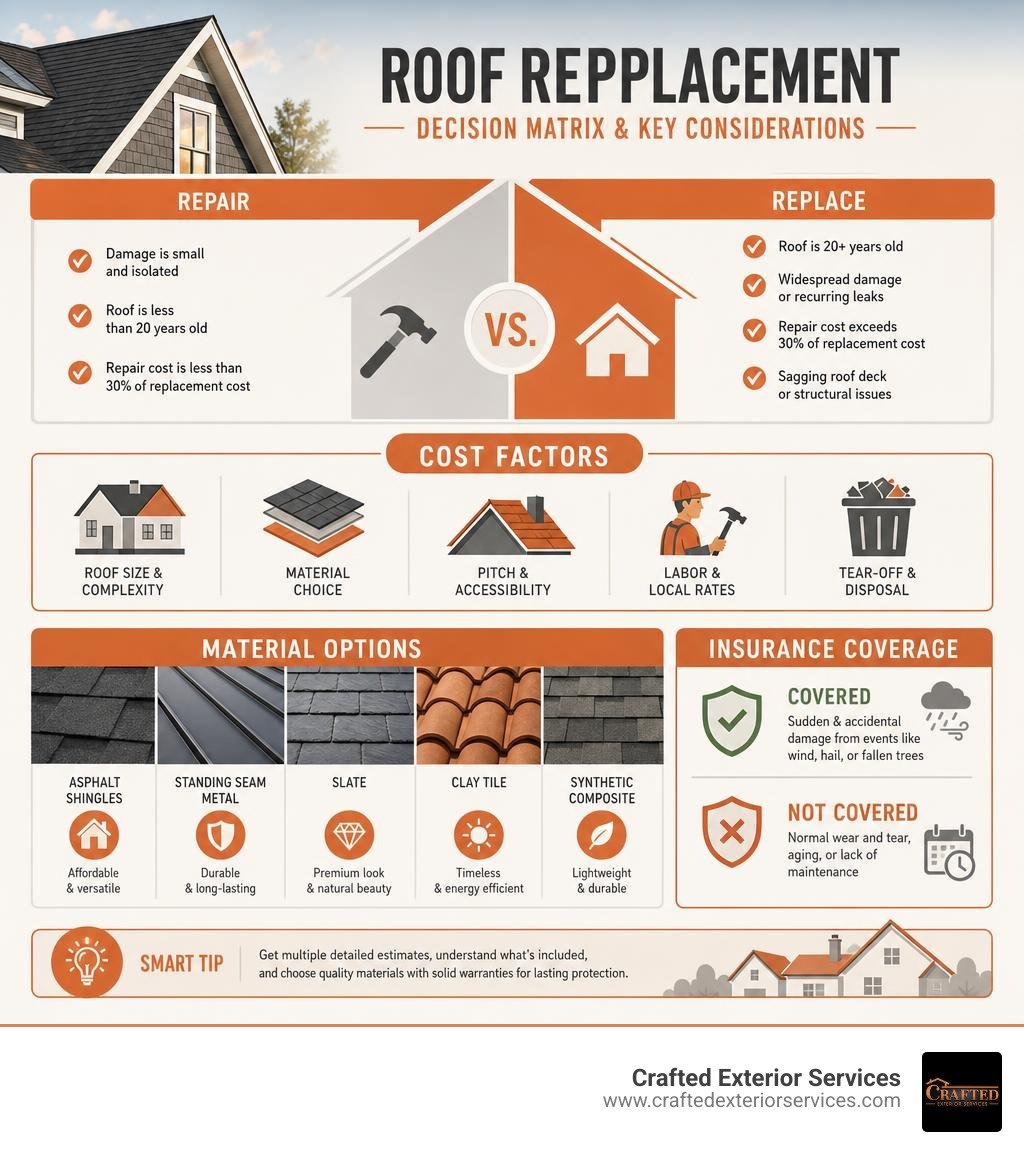
Roof replacement terms explained:
Repair vs. Roof Replacement: How to Know When It’s Time

Deciding whether to patch a leak or invest in a full roof replacement is a common dilemma. While a spot repair is cheaper upfront, continuing to patch an old, failing roof is a classic example of throwing good money after bad.
To make a financially sound decision, we recommend using the 30% Rule: if the cumulative cost of roof repairs over a 12-month period exceeds 30% of the total cost of a complete replacement, a full replacement is the more economical choice over the long term.
As a general rule of thumb, asphalt shingle roofs have a functional lifespan of 20 to 25 years. If your roof is approaching or has passed this milestone, its structural integrity is already compromised. Petrochemical oils in the asphalt core dry out over time, making shingles brittle, inflexible, and highly prone to wind damage or cracking during thermal cycling.
If you are trying to determine your roof’s current health, you can start by visiting the Crafted Exterior Services homepage to schedule a professional inspection, or read our guide on How to Tell When It’s Time to Fix or Replace Your Roof. For those with younger roofs, there are also several Expert Tips for Extending the Life of Your Home’s Roof that can delay a costly tear-off.
Key Signs Your Home Needs a Full Roof Replacement
While a professional on-roof inspection is the safest way to spot deep structural issues, a self-inspection using a pair of binoculars can help you catch up to 80% of visible roofing problems from the safety of the ground. Look for these critical warning signs:
- Curling, Cupping, or Clawing Shingles: When shingle edges curl upward or the centers bow, the shingles have lost their adhesion and can no longer shed water or resist high winds.
- Widespread Granule Loss: Check your gutters and downspouts. Finding heavy piles of sand-like granules means your shingles have lost their protective UV barrier and will deteriorate rapidly.
- Daylight in the Attic: If you can see beams of light coming through the roof boards in your attic, water is already getting in.
- Structural Sagging: A sagging or spongy roof deck indicates advanced rot in the wood sheathing underneath, requiring immediate structural attention.
If you notice any of these symptoms, explore our list of 10 Signs Your Roof Needs Immediate Attention to prevent catastrophic interior water damage.
Cost-Effective Alternatives to a Complete Tear-Off
If your roof is structurally sound but showing localized wear, a full replacement might not be your only option. Consider these alternatives:
- Spot Repairs: Best for minor wind or tree damage. Replacing a few wind-blown shingles or sealing a leaky chimney flashing can easily extend your roof’s life by a few years.
- Roof Restoration Treatments: Plant-based bio-oil treatments can replenish the dried-out petrochemicals in asphalt shingles, restoring flexibility and adding up to five years of life per application at a fraction of replacement costs.
- Metal Overlays: Because metal roofing is exceptionally lightweight, some building codes allow you to install a metal roof directly over existing asphalt shingles without a tear-off. However, you must consider the trade-offs. To learn more about the pros and cons of this method, check out our analysis on Should You Put a Metal Roof Directly Over Your Old Asphalt Shingles.
How Much Does a New Roof Cost in 2026?
The cost of a roof replacement varies widely based on geographic location, material choices, and the complexity of your home’s architecture. In the Martinsburg, WV, and Hagerstown, MD areas, most standard residential roof replacements fall between $7,500 and $15,000 for architectural asphalt shingles.
To help you budget realistically, we have compiled a comparison of the most common roofing materials available in 2026:
| Material Type | Cost Per Square Foot (Installed) | Average Lifespan | Durability & Wind Rating |
|---|---|---|---|
| Asphalt Shingles (3-Tab) | $3.00 – $5.00 | 15 – 20 Years | Moderate; up to 60-110 mph winds |
| Architectural Asphalt | $4.00 – $7.00 | 25 – 30 Years | High; up to 110-130 mph winds |
| Standing Seam Metal | $8.00 – $18.00 | 40 – 70 Years | Excellent; highly wind/hail resistant |
| Synthetic Composite | $10.00 – $18.00 | 50+ Years | Excellent; Class 4 impact rated |
| Natural Slate / Stone | $20.00 – $35.00 | 100+ Years | Maximum; fireproof, heavy structural load |
For a deeper dive into national pricing trends, consult the How Much Does It Cost for a Roof Replacement? Complete 2026 Price Guide – Geometry of Molecules. To understand how local labor rates and climate factors impact pricing in West Virginia, read our localized guide: Don’t Get Roof Ripped: The Ultimate Guide to Roofing Costs in Martinsburg WV.
How Roof Size, Pitch, and Complexity Affect Your Estimate
Roofers do not measure your roof in standard square feet; they use a unit called a roofing square, which is equal to 100 square feet of roof surface area. A 2,000-square-foot home footprint can easily require 24 to 30 squares of roofing material once you account for pitch and overhangs.
Beyond size, several architectural factors will drive up your estimate:
- Roof Pitch (Slope): Any roof with a pitch steeper than 7:12 or 8:12 requires specialized safety harnesses, scaffolding, and toe boards. This slows down the crew and can add 20% to 50% to your labor costs.
- Complexity and Planes: A simple gable roof with two flat planes is the easiest and cheapest to replace. A complex roof with multiple dormers, deep valleys, and hips requires extensive flashing and precise shingle cutting, which increases material waste and labor hours.
For help calculating your roof’s exact geometry and slope, refer to the Roof Replacement: Complete 2026 Guide — Process, Materials, Cost & Timing.
Comparing Materials: Asphalt Shingles vs. Metal and Premium Options
Choosing the right material is a balance of upfront cost and long-term value. On a pure cost-per-year-of-service basis, architectural asphalt shingles and standing seam metal are roughly tied as the most economical long-term choices.
For a detailed side-by-side comparison of performance, read Asphalt Shingles vs Metal Roofs Which Is Better.
If you decide on asphalt, our Step-by-Step Guide to Asphalt Shingle Roofing Costs breaks down the differences between basic 3-tab options and premium architectural lines. For homeowners looking for lifetime durability, explore our specialized services for Metal Roofing and Standing Seam Metal Roofing.
Understanding Your Quote and Avoiding Hidden Costs

A reputable roofing estimate should be fully itemized, listing every component, material brand, and service charge. If a contractor hands you a quote with a single, lump-sum number and refuses to break it down, walk away. The cheapest quote often omits essential elements — like trash disposal or permit fees — which will simply reappear as unexpected “change orders” halfway through the project.
To protect your wallet, read our guide on Roofers in the Area Who Offers the Best Bang for Your Buck.
What a Standard Roof Replacement Quote Includes
A comprehensive, professional quote should explicitly include:
- Tear-off and Disposal: Complete removal of your old shingles and underlayment, including dumpster rental and landfill fees.
- Underlayment: Installation of a high-quality synthetic underlayment (which is far more durable and slip-resistant than traditional organic felt).
- Ice and Water Shield: A self-adhering waterproof membrane installed along the eaves, valleys, and rakes. In cold climates like West Virginia and Maryland, this must extend at least 24 inches past the interior wall line to protect against winter ice dams.
- Drip Edge and Flashing: New metal edging to direct water away from your fascia, and professional flashing around chimneys, vents, and valleys.
- Ventilation: Upgrades to your ridge and soffit vents to ensure a balanced attic ventilation system.
For a detailed look at how code compliance and regional standards affect standard quotes, see the reference guide on Roof Replacement in Palm Beach County | Tile, Shingle, Metal | $15K-$40K | PBC Roofing.
Hidden Fees and the Decking Contingency
The most common hidden cost in any roof replacement is the condition of the wood decking (plywood or OSB sheathing) underneath your old shingles. A contractor cannot fully assess the wood deck until the old roof is completely torn off.
A standard quote should always include a decking contingency clause, specifying a flat rate (typically $75 to $100 per 4×8 sheet) for replacing rotted or soft wood. If your roof has suffered from chronic, slow leaks, expect to replace anywhere from 2 to 10 sheets of plywood.
Additionally, if your home has active solar panels, they must be completely removed by a licensed solar technician before the roofing crew can work, and reinstalled afterward. This coordination can add $2,000 to $5,000 to your total project cost. For a real-world case study on how solar arrays and skylights impact installation logistics, read San Jose Roof Replacement With Solar Panels: A Complete Almaden Valley Project – Roofing Contractors| Lifetime Roofing & Renovation.
The Step-by-Step Installation Process and Timeline
A roof replacement is a highly coordinated structural construction project. While the noise and activity can be intense, knowing what to expect can help you prepare. To keep your home and family safe during the chaos, review our New Roof Installation Tips to Keep Your Sanity Intact.
Day-by-Day Breakdown of a Typical Project
For an average 2,000-square-foot home, the physical installation process takes 1 to 2 days of active work under clear weather conditions.
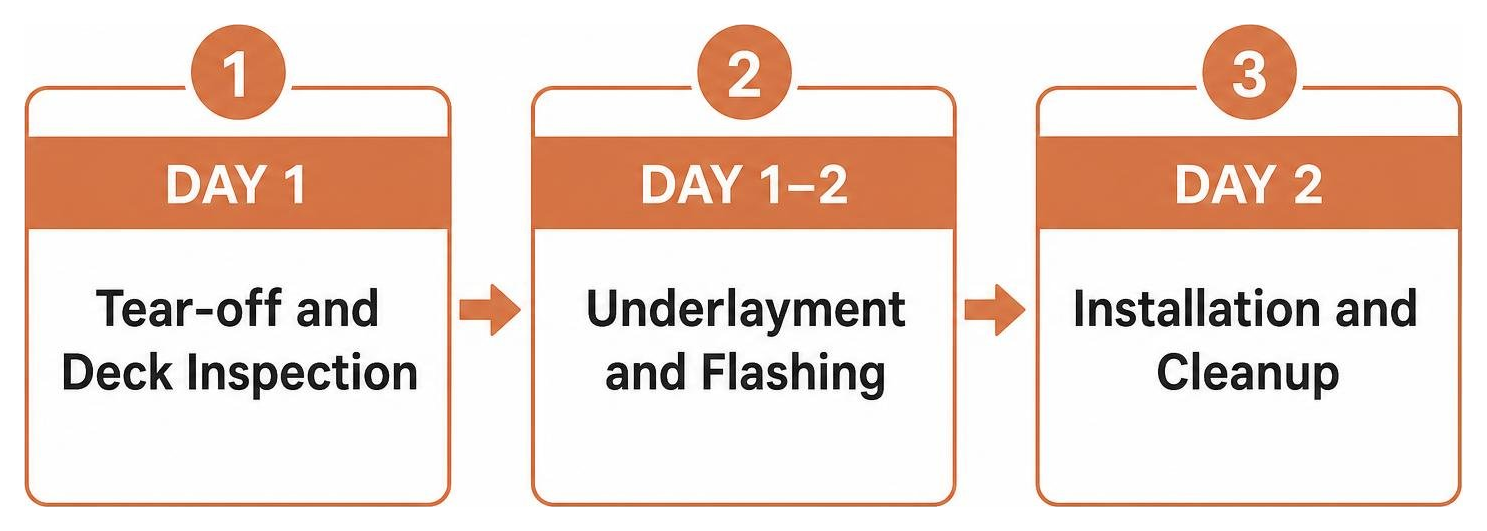
- Day 1: Property Protection & Tear-Off: The crew drapes heavy tarps over your landscaping, decks, and siding to protect them from falling debris. They then strip the old shingles down to the bare wood decking and inspect the wood for rot.
- Day 1–2: Underlayment & Flashing: Any rotted wood sheets are replaced. The crew installs the ice and water shield in valleys and eaves, followed by synthetic underlayment across the entire deck. Drip edges and flashing are secured.
- Day 2: Shingle Installation & Cleanup: The new shingles are laid and nailed down. The crew installs the ridge vents and performs a meticulous cleanup, running heavy magnetic sweeps across your yard and driveway to collect stray nails.
For a detailed look at how a professional crew manages property protection and daily schedules, you can read the guide on Hixson | Full Roof Replacement | Roof Replacement | HEP Roofing.
Warranties You Should Expect: Materials vs. Workmanship
When investing in a new roof, you must understand the difference between the two types of warranties protecting your investment:
- Manufacturer Material Warranty: Covers defects in the shingles themselves. Premium shingles from major brands like CertainTeed, GAF, or Owens Corning often carry lifetime limited warranties.
- Contractor Workmanship Warranty: Covers leaks or failures caused by improper installation.
The biggest risk for homeowners is the “installation loophole”: if a roof leaks due to poor installation, the manufacturer will void your material warranty, leaving you completely unprotected if your contractor only offered a short 1- or 2-year workmanship warranty. At Crafted Exterior Services, we close this loophole by using manufacturer-approved installation methods that allow us to offer extended, matching labor and material warranties.
To learn more about comparing warranty structures and avoiding common loopholes, consult the guide on Roof Replacement in Bismarck, ND | Wegner Roofing & Solar.
Navigating Homeowners Insurance and Storm Damage Claims
If your roof has been damaged by a sudden, accidental peril — such as high winds creasing shingle tabs, falling tree limbs, or hail bruising the shingle mat — your homeowners insurance policy should cover the cost of a roof replacement.
However, insurance companies will not cover roofs that fail due to old age, normal wear and tear, or deferred maintenance.
When dealing with storm damage, the type of policy you have makes a massive financial difference:
- Replacement Cost Value (RCV): The insurance company pays the actual current cost to replace your roof, minus your deductible.
- Actual Cash Value (ACV): The insurer only pays the depreciated value of your roof based on its age. If a 20-year-old roof fails, an ACV policy may only pay out a tiny fraction of the replacement cost, leaving you to cover the rest out of pocket.
If you suspect your roof has suffered storm damage, do not file a claim blindly. Contact us first for a professional inspection. We will document the damage with date-stamped photos, meet your insurance adjuster on-site to ensure all damage is properly recorded, and help you navigate the paperwork.
For emergency situations, explore our specialized Storm Damage Roof Repair and Emergency Roof Repair services.
How to Vet and Choose a Reputable Roofing Contractor
Because roofing is a high-stakes, high-risk trade, choosing the right contractor is just as important as choosing the right material. A 10-year workmanship warranty from a fly-by-night “storm chaser” is completely worthless if the company goes out of business next season.
To find an honest, reliable partner, read The Ultimate Guide to Finding the Best Roof Repair Company for Your Home.
As a locally owned, non-franchise team based in Martinsburg, WV, Crafted Exterior Services is fully insured and holds manufacturer-approved certifications. We live and work in the communities we serve, meaning we will be here to stand behind our work for decades to come.
Critical Questions to Ask Before Signing a Contract
Before signing any contract or making a deposit, ask these essential questions:
- Are you fully licensed and insured? Always ask to see their general liability and workers’ compensation insurance certificates.
- Do you use subcontractors? If so, request a lien waiver upon final payment. This protects you from being held financially liable if the primary contractor fails to pay their crew or material suppliers.
- Are you certified by the manufacturer? Shingle manufacturers will only honor extended system warranties if the roof is installed by a certified contractor.
- What are your payment terms? A reputable contractor should never ask for a deposit larger than 10% to 25% upfront, with the remaining balance due only after the work is completed and passes inspection.
For specific tips on choosing an installer in our Maryland service area, see How to Choose the Best Asphalt Shingle Roof Installer in Hagerstown.
Frequently Asked Questions About Replacing Your Roof
Can I install a new roof over my existing shingles?
While an overlay (installing a second layer of shingles over the old ones) can save you $2,000 to $4,000 upfront by skipping the tear-off phase, we highly advise against it. Most building codes limit residential roofs to a maximum of two layers because of weight limits. Furthermore, an overlay traps heat, which shortens the lifespan of the new shingles by 10% to 20%, prevents a proper inspection of the wood deck underneath, and will completely void most manufacturer warranties.
How long does a typical residential roof installation take?
For a standard 2,000-square-foot single-family home, a professional crew can complete a full tear-off and installation in 1 to 2 days of active work. Larger, highly complex roofs or standing seam metal systems can take 3 to 5 days. Extreme weather, such as heavy rain or freezing temperatures (shingles need temperatures above 40°F to seal properly), can cause temporary scheduling delays.
Does homeowners insurance cover age-related wear and tear?
No. Homeowners insurance is designed to cover sudden, accidental storm damage, wind, hail, or fire. It does not cover gradual deterioration, moss growth, or roof failure caused by age and lack of maintenance. Homeowners are expected to budget for and replace their roofs once they reach the end of their natural lifespan.
Conclusion
A roof replacement is a significant financial investment, but it is also one of the most critical steps you can take to protect your home’s structural integrity, preserve its resale value, and secure long-term peace of mind. By choosing high-quality, manufacturer-approved materials and partnering with a licensed, local contractor, you can ensure your home remains safe and dry for the next 25 to 50 years.
At Crafted Exterior Services, we are proud to offer homeowners in Martinsburg, WV, Bunker Hill, WV, and Hagerstown, MD a transparent, stress-free roofing experience. As a locally owned team, we offer zero-down financing options, full insurance coverage, and manufacturer-certified installations that stand up to our regional climate.
Ready to secure your home? Explore our professional Roof Replacement Services or Call us at (304) 555-0199 to schedule your free, no-pressure roof inspection today!