
A Practical Guide to Local Exterior Contractor Reviews and Info
For homeowners facing roof leaks, storm damage, or aging siding, a reliable local exterior contractor should offer clear inspections, written estimates, proof of insurance, and support through the insurance-claim process. Partnering with a trusted provider like Crafted Exterior Services helps Martinsburg-area homeowners plan roofing, siding, and gutter work with a focus on durable repairs and straightforward communication.
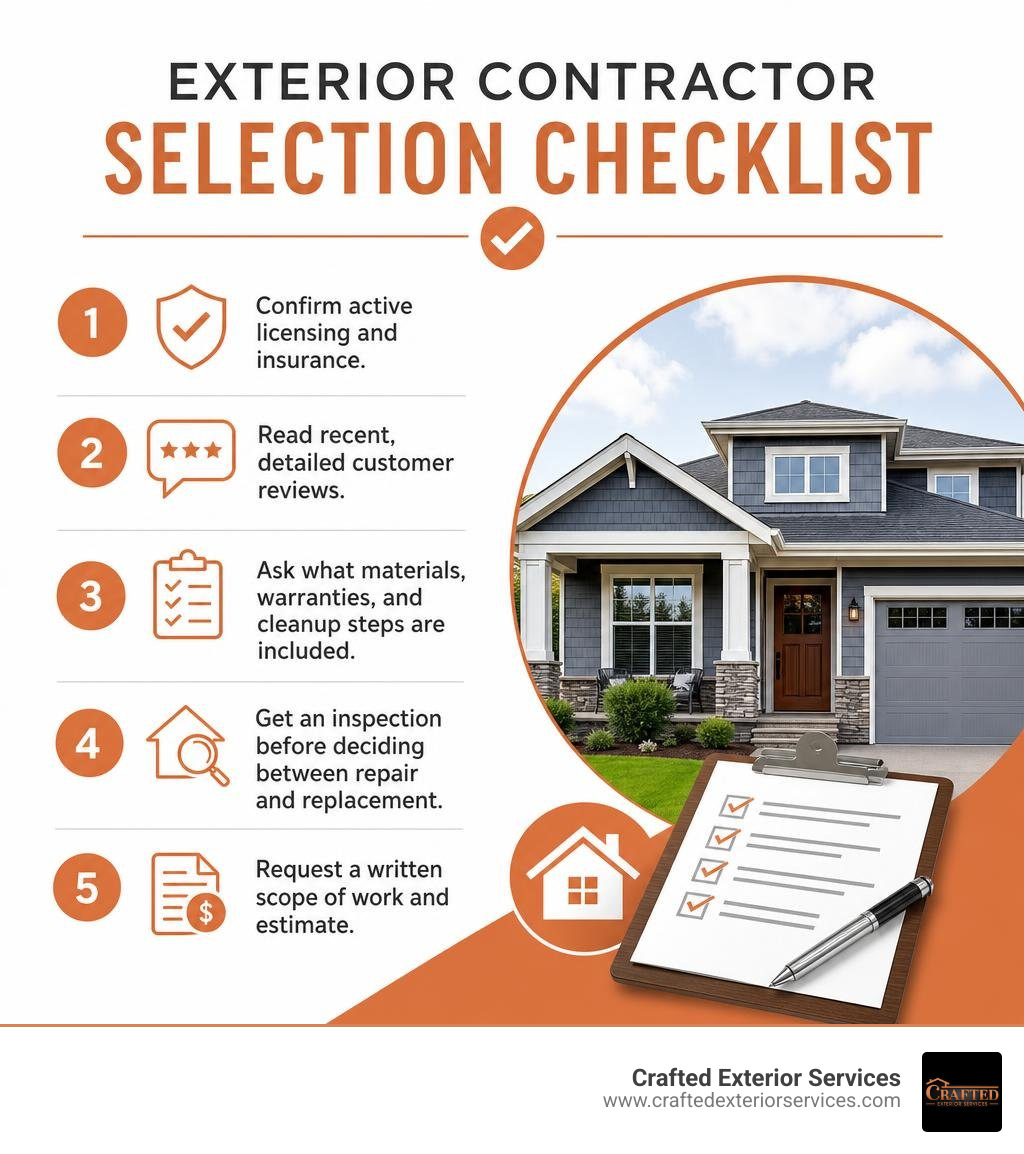
A quick contractor checklist:
- Confirm active licensing and insurance.
- Read recent, detailed customer reviews.
- Ask what materials, warranties, and cleanup steps are included.
- Get an inspection before deciding between repair and replacement.
- Request a written scope of work and estimate.
This guide explains how to research exterior contractors and make a confident decision before work begins.
Services and Solutions Offered by Professional Exterior Contractors
Professional exterior contractors provide complete home envelope protection, ensuring every component from the roof peak down to the foundation works as a unified defense system. Homeowners researching contractors often evaluate standard offerings across Roofing Services, Siding Services, and water management systems. A complete exterior system shields structural framing from moisture intrusion, prevents high utility costs caused by thermal bridging, and elevates curb appeal.
Our primary focus centers on comprehensive exterior remodeling and protection. Key solutions include:
- Residential Roofing Systems: Complete tear-offs, decking repairs, underlayment installation, and finish shingle or metal applications.
- Commercial Roofing: Low-slope and flat roof maintenance, single-ply membrane repairs, and elastomeric coating applications.
- Storm Damage Restoration: Emergency tarping, wind shingle replacement, and complete hail impact mitigation.
- Exterior Wall Cladding: Vinyl siding, soffit wrapping, fascia trim protection, and engineered wall insulation.
- Rainwater Management: Seamless aluminum gutter fabrication, downspout expansion, and debris guard installations.
Regional Locations and Service Areas
Locally owned contractors focus on specific geographic corridors to guarantee fast response times, particularly after severe storm activity. We serve homeowners throughout the Eastern Panhandle of West Virginia and Western Maryland, maintaining active operations across Martinsburg WV, Bunker Hill WV, and Hagerstown MD.
Working with a truly local team ensures that your building practices adhere strictly to regional municipal codes and local weather patterns. Regional climate conditions in West Virginia and Maryland present unique challenges, including freezing winter temperatures, heavy ice buildup, and severe summer thunderstorm lines. Selecting a team familiar with localized weather guarantees that underlayments, ice barriers, and gutter capacities are calculated specifically for our regional snow loads and rainfall rates. Proper installation of seamless Gutters prevents foundation erosion and keeps roof runoff safely away from basement walls during heavy downpours.
Additional Exterior Improvements and Window Services
Comprehensive exterior care extends beyond shingles and siding panels. Energy efficiency relies heavily on high-performance fenestration and detailed trim sealing. Upgrading outdated single-pane glass through professional Window Installation stops drafts, lowers monthly heating and cooling costs, and reduces exterior noise infiltration.
Furthermore, integrating custom skylights brings natural light into interior spaces while providing leak-tight flashing kits designed to prevent moisture penetration. Exterior technicians also focus on protecting structural woodwork by wrapping wooden soffits and fascia boards in custom-bent aluminum trim. This eliminates repetitive painting cycles, prevents timber rot caused by overflowing gutters, and creates an impenetrable barrier against nesting pests.
Evaluating Customer Reviews, Ratings, and Accreditations
Evaluating contractor reviews requires looking past simple star ratings to examine how companies execute projects from start to finish. When researching reviews online, look for consistent patterns in communication, scheduling accuracy, site cleanliness, and post-project follow-up. High-quality reviews specifically detail how contractors handle unforeseen structural issues or weather delays during installation.
Licensing, Insurance, and Certifications
A legitimate home improvement contractor must hold current state licenses and carry comprehensive general liability and workers’ compensation coverage. Homeowners should always ask for license credentials and proof of insurance before signing any agreement.
Key credentials to verify include:
- State Registration: Valid licenses registered with state contracting boards in West Virginia and Maryland.
- Full Insurance Coverage: Active commercial liability coverage along with complete workers’ compensation insurance to protect homeowners from project liability.
- Manufacturer Certifications: Certifications from leading material manufacturers like CertainTeed, GAF, and Owens Corning. These accreditations allow contractors to offer extended non-prorated material and labor warranties.
- Clean Bureau Records: A clean rating with local business bureaus and zero unresolved consumer complaints.
Customer Feedback on Execution, Cleanup, and Emergency Care
Detailed customer feedback routinely highlights jobsite management as a major factor in client satisfaction. Homeowners appreciate crews that arrive punctually, utilize heavy-duty tarps to shield landscaping and flower beds, and execute thorough post-job cleanup.
Top-tier contractors stand out during jobsite restoration by conducting multiple magnetic nail sweeps across driveways, lawns, and walkways to ensure no sharp construction debris remains where children or pets play. Furthermore, prompt emergency response during severe weather—such as applying temporary protective tarps within hours of a storm leak—demonstrates a contractor’s true commitment to protecting property investments.
The Complete Roof Installation and Replacement Process
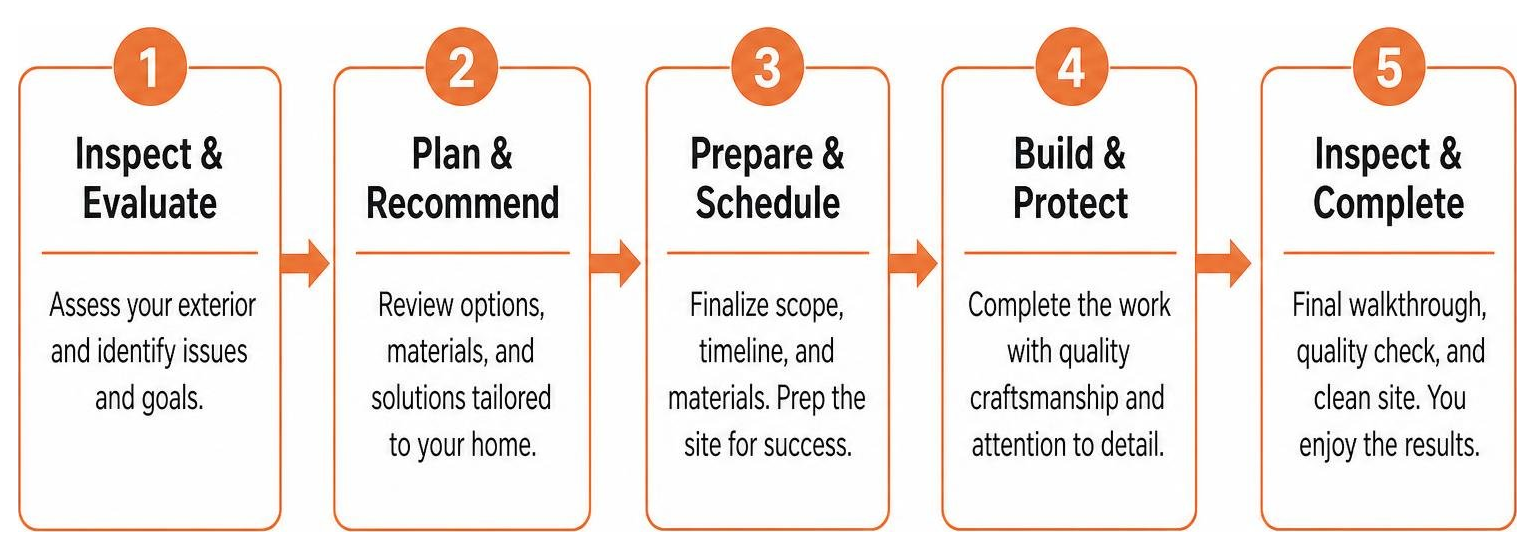
A full roof replacement involves a systematic multi-step workflow designed to deliver long-term structural integrity. Understanding each phase helps homeowners know exactly what to expect on installation day.

The complete replacement process follows these essential stages:
- Initial Property Assessment: Conducting an end-to-end exterior assessment and internal attic inspection to calculate square footage, inspect structural rafters, check existing intake/exhaust ventilation, and identify moisture stains.
- Material Selection and Estimate: Reviewing shingle options, underlayment weights, flashing details, and color choices to produce a comprehensive, transparent written estimate.
- Property Protection Prep: Covering surrounding shrubbery, deck structures, and air conditioning units with heavy-duty protective tarps before work starts.
- Complete Tear-Off: Stripping off all existing shingle layers and old felt underlayment down to the raw roof deck. Laying new shingles directly over old, compromised layers is never recommended as it masks wood rot and voids manufacturer warranties.
- Deck Repair and Underlayment: Inspecting structural plywood or OSB sheets, replacing soft or warped decking, and installing self-adhering ice-and-water shield barriers along eaves, valleys, and wall intersections.
- Shingle and Flashing Installation: Installing synthetic underlayment, starter shingle strips, step flashing around chimneys and walls, drip edges along perimeter lines, and top-tier roofing materials secured with hot-dipped galvanized fasteners.
- Ventilation Sealing and Trim: Fitting ridge vents, pipe boots, and exhaust caps to ensure balanced attic airflow.
- Final Clean-Up and Inspection: Performing magnetic lawn sweeps, clearing gutters, hauling away all job debris, and conducting a final quality walk-through with the homeowner.
When planning a total roof overhaul, scheduling through certified Roof Replacement Services guarantees that your building envelope complies fully with regional building codes and manufacturer warranty rules.
Material Options and Durability
Selecting the right material balances upfront budget considerations with long-term weather performance. Homeowners in West Virginia and Maryland typically choose between high-durability composite asphalt shingles and low-maintenance architectural standing seam metal systems.
| Material Type | Typical Lifespan | Primary Advantages | Best Suited For |
|---|---|---|---|
| Architectural Asphalt Shingles | 25 – 30 Years | High wind resistance, wide color selection, economical upfront cost | Standard residential slopes, budget-conscious home overhauls |
| Standing Seam Metal | 40 – 70 Years | Superior snow shedding, extreme wind rating, zero exposed fasteners | Modern architectural homes, low-slope roofs, high snow zones |
| Flat Membrane (TPO/EPDM) | 20 – 25 Years | Seamless water pooling protection, high UV reflectivity | Residential additions, porches, commercial structures |
For standard residential structures, modern Asphalt Shingle Roofing features fiberglass mat cores reinforced with UV-blocking mineral granules. These multi-layer shingles simulate the texture of natural slate while resisting wind uplift up to 130 mph. Alternatively, investing in custom Metal Roofing provides unmatched lifespan and maximum protection against falling branches, driving rain, and winter ice accumulation.
Key Warning Signs You Need a Roof Replacement
Recognizing roof deterioration early prevents minor leaks from causing widespread interior framing damage, sheetrock rot, and electrical hazards.
Keep an eye out for these clear indicators of roof failure:
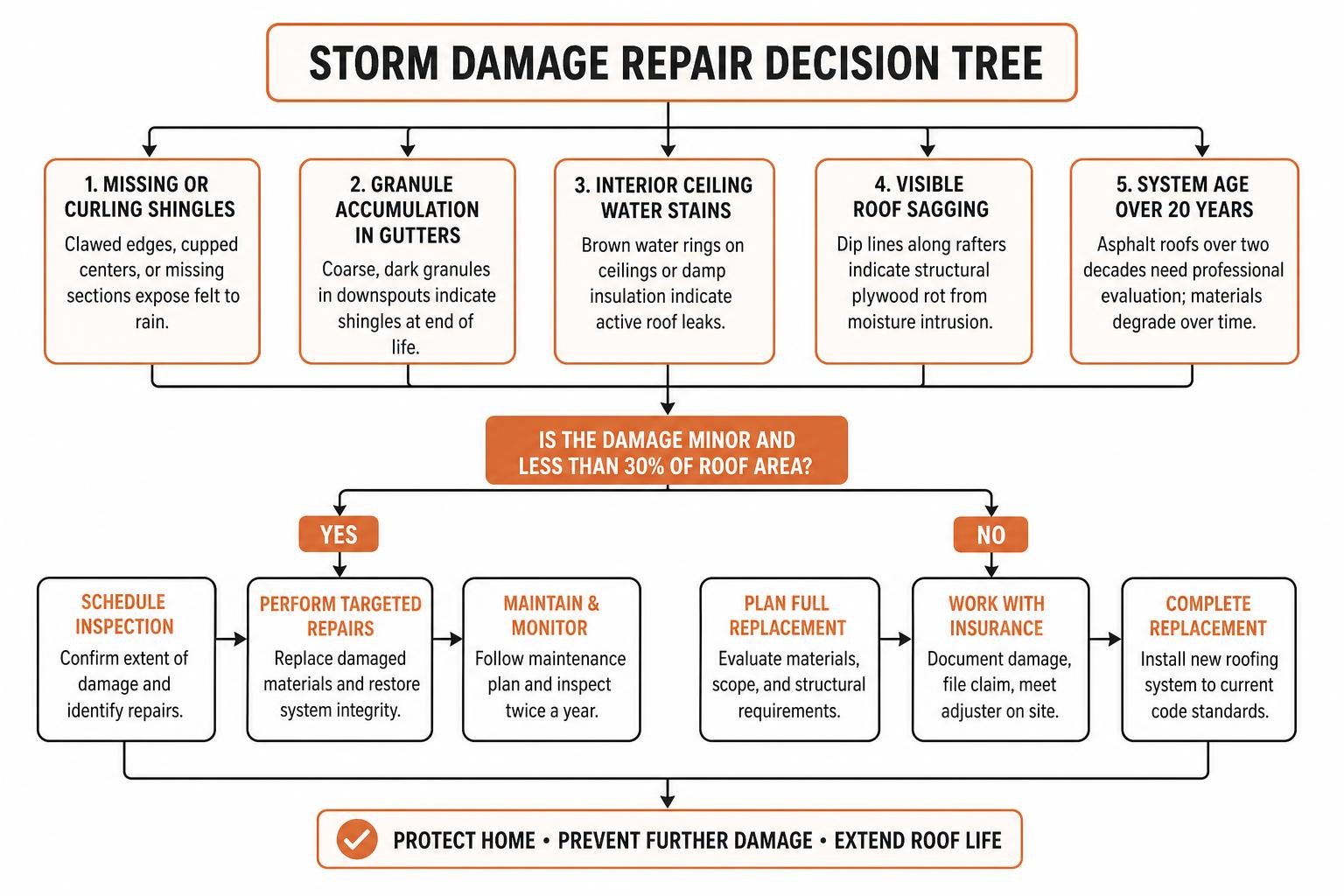
- Missing or Curling Shingles: Shingles with clawed edges, cupped centers, or missing sections leave underlying felt exposed to direct rain.
- Granule Accumulation in Gutters: Excessive coarse, dark granules accumulating in downspouts indicates that asphalt shingles have reached the end of their weather-resistant life.
- Interior Ceiling Water Stains: Brown water rings on upper-story ceilings or damp insulation in the attic point to active roof deck leaks.
- Visible Roof Sagging: Dip lines along rafter planes indicate structural plywood rot caused by long-term undetected moisture intrusion.
- System Age Over 20 Years: Standard asphalt roofs older than two decades require professional evaluation, as structural sealants and thermal bonds degrade over time.
Managing Roof Replacement Costs, Insurance, and Maintenance
Roof replacement pricing depends on total square footage, roof pitch, structural complexity, layer tear-off requirements, and material grade. Simple single-story gable roofs require significantly less labor and scaffolding than steep multi-gable roofs with complex valley intersections.
For straightforward leak fixes or storm-damaged sections, scheduling localized Roof Repair Services restores system integrity without requiring a complete replacement. However, if repairs exceed 30% of total surface area, full replacement usually delivers far greater long-term value.
Navigating Storm Damage and Insurance Claims
Severe weather, hail impacts, and high-wind events frequently damage roof coverings and exterior cladding across our region. When hail impacts shingles, it fractures the underlying asphalt mat, leading to premature water leaks. High winds can lift shingle seals, breaking their adhesive bond and allowing wind-driven rain to enter beneath the surface.
Homeowners dealing with storm damage should follow a structured claim approach:
- Document Visible Damage: Photograph fallen tree limbs, missing shingles, damaged gutters, or internal ceiling drips immediately after the storm passes.
- Schedule a Professional Storm Inspection: Contact a local contractor to perform a full damage assessment and install emergency tarping if active leaks are present.
- File the Insurance Claim: Submit your contractor’s detailed photographic inspection report directly to your insurance provider.
- Coordinate the Adjuster Meeting: Ensure your contractor meets the insurance adjuster on site during their inspection to review all identified damage together.
- Review the Scope of Loss: Verify that the insurance scope of work covers all necessary repairs, structural decking replacements, and code compliance upgrades before restoration begins.
For comprehensive assistance during storm recovery, relying on specialized Storm Damage Roof Repair ensures that every detail of your insurance scope is handled accurately and fully restored.
Inspection Schedules and Long-Term Care
Preventive maintenance extends the lifespan of your roof and prevents costly emergency repairs. Roofs should undergo thorough inspections twice a year—ideally in the spring after winter freeze cycles end and in the fall before winter snowfall arrives.
Essential long-term roof care steps include:
- Biannual Gutter Cleaning: Clearing leaves, twigs, and organic buildup from gutters prevents water from backing up under eave shingles.
- Trimming Overhanging Trees: Cutting back tree branches within six feet of the roof prevents animal access and eliminates shingle abrasion caused by wind-blown limbs.
- Verifying Attic Ventilation: Ensuring soffit intake vents and ridge exhaust vents remain unblocked balances attic temperatures, prevents ice dam formation, and reduces summer cooling loads.
- Removing Organic Growth: Treating moss or algae build-up with manufacturer-approved gentle cleaning solutions preserves mineral granules and prevents moisture retention.
Frequently Asked Questions About Local Exterior Contractors
How long does a typical roof replacement take to complete?
For most standard single-family residential properties, a full roof replacement takes between one and three days. An experienced crew can complete a standard asphalt shingle tear-off and re-roof in a single day under clear weather conditions. Larger homes, steep roof pitches, complex architectural designs, or multi-layer tear-offs may require two to three days to finish completely.
Will homeowners insurance cover roof repair or replacement costs?
Homeowners insurance typically covers roof repair or complete replacement if the damage is caused by sudden, accidental unpreventable events, such as windstorms, hail, fallen trees, or severe storm activity. Policies generally exclude coverage for damage caused by neglected maintenance, gradual wear and tear, or roofs that have naturally exceeded their operational lifespan.
What flexible financing options do exterior contractors offer?
Reputable exterior contractors provide flexible financing solutions to help homeowners manage roof and siding investments without depleting emergency savings. Options often include zero-down financing plans, deferred interest periods, and low monthly payment structures tailored to fit home improvement budgets.
Conclusion
Selecting the right exterior contractor is the single most important decision when updating your home’s roof, siding, windows, or gutters. By confirming active state licenses, verifying insurance coverage, reviewing detailed customer feedback, and requiring clear written estimates, you protect your property investment and secure long-term peace of mind.
Crafted Exterior Services is proud to serve homeowners across Martinsburg WV, Bunker Hill WV, and Hagerstown MD. As a non-franchise, locally owned team, we deliver manufacturer-approved products, zero-down financing options, full insurance coverage, and direct communication on every job. Whether you need a simple leak repair, complete storm damage restoration, or a full exterior overhaul, our team treats your home with the care and precision it deserves.
Have questions about your roof or siding? Visit us online to Explore Professional Roofing Services and request your free, detailed property estimate today.