

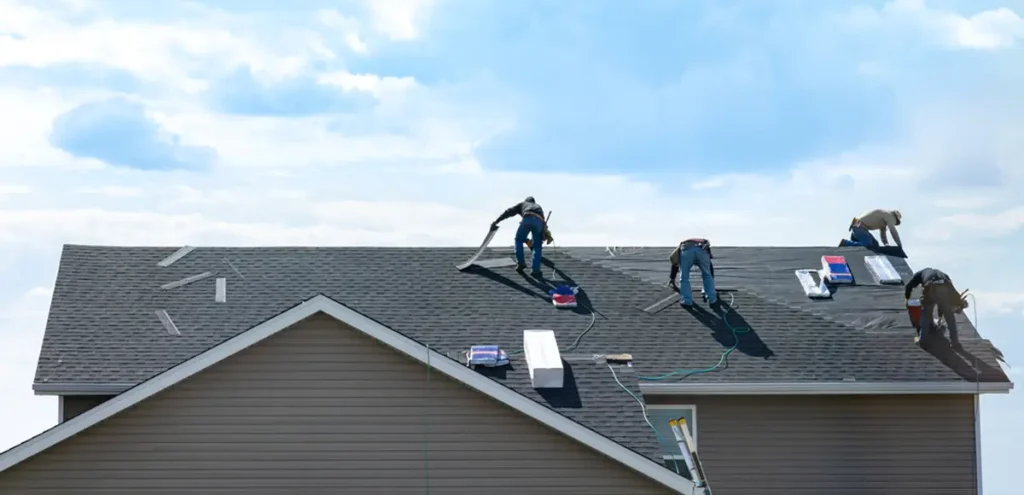
Standing in your driveway, staring up at your roof, and wondering whether that missing shingle is nothing or the start of something expensive is a familiar moment for most homeowners. The tricky part is that roofs rarely fail all at once. They send warning signs for months, sometimes years, before a full failure forces the issue. Knowing how to read those signs, and understanding when a simple repair is enough versus when a full replacement is the smarter investment, can save Martinsburg homeowners thousands of dollars.
This guide walks through the 12 most reliable warning signs, a practical decision framework, real cost expectations, and what to know before you ever speak to an insurance adjuster. It is written by the local team at Crafted Exterior Services, and it pairs well with our companion guide on roofing tips and maintenance if you want to prevent these problems in the first place.
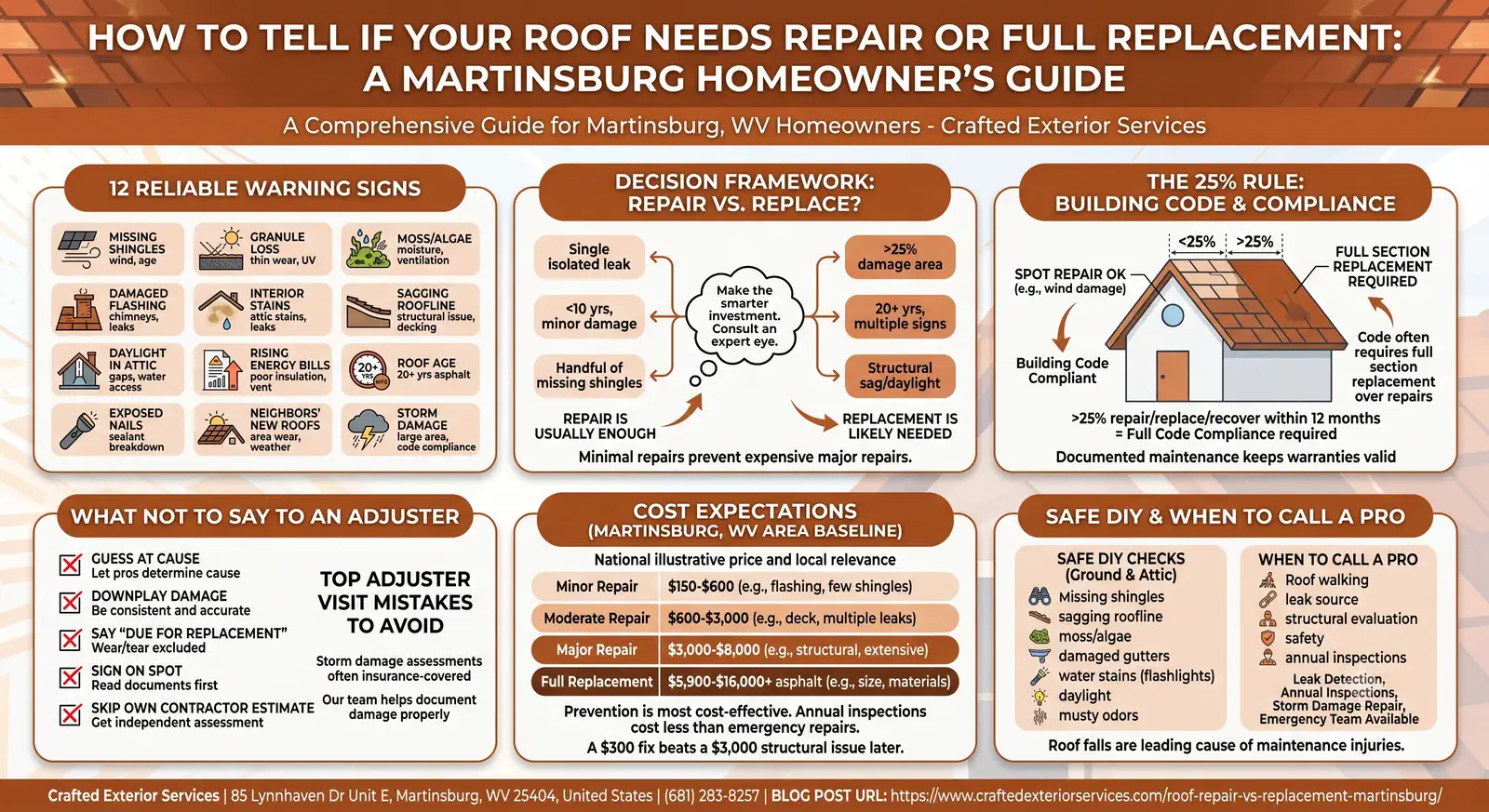
12 Warning Signs Your Roof May Need Repair or Replacement
Not every sign below means you need a full replacement. Some point to a quick, affordable repair. Others are a clear signal that repair money is better spent toward a new roof. Read through all 12, since it is often the combination of signs, not just one, that tells the real story. Later in this guide, a decision framework will help you weigh these signs together instead of reacting to just one.
1. Missing, Cracked, or Curling Shingles
A single missing or cracked shingle after a windstorm is usually a straightforward roof repair. Widespread curling or cracking across multiple sections of the roof, however, usually points to shingles that are simply at the end of their service life. Curling in particular often indicates poor attic ventilation or age-related asphalt breakdown, both of which tend to affect the whole roof at roughly the same rate rather than isolated spots.
2. Granule Loss in Gutters and Downspouts
Asphalt shingles shed a small number of granules as they age, which is normal. Large amounts of granules collecting in your gutters, especially if your roof is not brand new, means the protective layer on your asphalt shingle roofing is wearing thin and losing its ability to block UV rays and moisture. Once significant bare spots develop, the underlying asphalt mat is exposed directly to sun and water, which accelerates cracking far faster than a shingle with intact granules.
3. Moss, Algae, or Dark Streaks
Dark streaks are usually algae and are mostly cosmetic, though persistent moss growth is a bigger concern. Moss holds moisture directly against the shingle surface, which can lift shingle edges and let water underneath. If moss keeps returning after cleaning, that is a sign of an underlying moisture or ventilation issue worth having inspected, rather than a problem that pressure washing or bleach alone will permanently solve.
4. Damaged or Deteriorated Flashing
Flashing seals the vulnerable areas where your roof meets chimneys, vents, and skylights. Rusted, cracked, or loose flashing is one of the most common sources of hidden leaks, and it is often repairable on its own without requiring a full roof replacement. Because flashing failures often go unnoticed until water has already reached the attic, this is one of the more valuable things a professional inspection catches early.
5. Water Stains, Leaks, or Musty Smells Inside
Interior water stains, active drips, or a musty smell in the attic mean water is already getting in. This should never wait. A small, isolated leak caught early is typically an affordable fix, often in the range of a few hundred dollars, but the same leak left unaddressed can lead to rotted decking, damaged insulation, and mold growth that pushes repair costs into the thousands. Contact our roof leak repair team right away rather than letting a small problem compound.
6. Sagging or Uneven Rooflines
A sagging or wavy roofline is one of the more serious signs on this list. It often points to a compromised structural component, such as damaged decking or a weakened truss, and typically requires a full inspection to determine whether repair is even possible. Sagging is rarely a standalone shingle problem, it is a structural one, which is why it almost always shifts the conversation from repair pricing to replacement pricing.
7. Daylight Visible Through the Attic Roof Boards
If you can see daylight coming through your roof boards from inside the attic, that means there are gaps large enough for water, pests, and outside air to get through as well. This is rarely an isolated fix and often signals it is time to consider replacement, particularly if the gaps appear across more than one section of the attic rather than a single pinhole.
8. Rising Energy Bills
An unexplained increase in heating or cooling costs can be traced back to a roof that no longer insulates or ventilates properly. Aging shingles and failing attic ventilation let conditioned air escape more easily than a well-maintained roof, and in older homes this effect compounds with any existing insulation gaps, making the roof one of several factors worth ruling out before assuming the furnace or air conditioner is to blame.
9. Roof Age (20 Years or Older)
Most asphalt shingle roofs are designed for a 20 to 30 year service life, though the real-world range depends heavily on installation quality, ventilation, and climate exposure. Once a roof crosses the 20-year mark, even one without obvious damage, it becomes significantly more likely that a repair is only a short-term fix rather than a lasting solution, since the underlying materials throughout the roof are aging at roughly the same rate even if damage has only appeared in one spot so far.
10. Exposed or Rusted Nails
Exposed or rusted roofing nails indicate that sealant has broken down and fasteners are no longer doing their job properly. Left alone, this becomes an entry point for water and a sign that the surrounding materials, including the sealant strips and adjacent shingles, are aging out along with the nails themselves.
11. Neighbors Getting New Roofs
If homes built around the same time as yours in your Martinsburg neighborhood are getting new roofs, it is worth paying closer attention to yours. Homes constructed in the same era typically experience the same weather exposure and used similar materials, which means your roof may be approaching the same point of wear even if it looks fine from the ground.
12. Storm Damage Covering a Large Area
A single damaged section from a storm is often repairable. Widespread damage across an entire slope or multiple sections of the roof changes the calculation entirely, both for cost efficiency and for code compliance, which brings us to the 25% rule covered later in this guide.
Do These Signs Look Different on Metal, Flat, or Commercial Roofs?
Most of the 12 signs above describe asphalt shingle roofs specifically, since that is the most common residential material in the Martinsburg area. But not every roof on the list matches that profile, and it is worth knowing how aging shows up differently depending on what is over your head.
Metal roofing, including standing seam systems, tends to show wear through fastener backout, seam separation, and surface rust rather than granule loss or curling. A well-maintained metal roof can last 40 to 70 years, roughly double an asphalt roof’s lifespan, which means a metal roof showing early signs of trouble is more likely a repair candidate than a replacement candidate, simply because there is more useful life left in the material itself.
Flat and low-slope roofing systems, common on additions, porches, and much of the commercial roofing in the area, fail differently as well. Ponding water, membrane punctures, and seam separation are the signs to watch for rather than shingle-specific damage. These systems also tend to have a shorter 20 to 30 year lifespan, similar to asphalt, so age becomes just as relevant a factor as it is for shingle roofs.
If you are unsure which category applies to your property, our residential roofing team can help identify what you have and how its specific wear patterns should be read.
Repair or Replace? A Quick Decision Framework
Weighing all 12 signs at once can feel overwhelming, so here is a simplified framework for the most common situations Martinsburg homeowners face.
| Situation | Repair Is Usually Enough | Replacement Is Usually Needed |
| Single leak isolated to one spot (flashing, vent boot) | Yes | |
| Roof is under 10 years old with isolated, minor damage | Yes | |
| A handful of shingles missing after a recent storm | Yes | |
| Damage covers more than 25% of a single roof section | Yes | |
| Roof is 20+ years old with multiple signs present at once | Yes | |
| Sagging, structural damage, or daylight through roof boards | Yes | |
| Recurring leaks in the same spot despite past repairs | Yes |
If your situation does not clearly fall into one column, that is exactly when a professional roof inspection earns its cost. An experienced eye can catch what a homeowner on the ground cannot.
What Is the 25% Rule for Roofing?
The 25% rule is a building code concept, originating in the International Building Code and International Residential Code, that has been adopted with variations by many state and local jurisdictions. It states that if more than 25% of a roof section is repaired, replaced, or recovered within a 12-month period, the entire section must be brought up to current building code rather than patched piecemeal.
This matters most after storm damage. A homeowner might assume a few damaged shingle sections can simply be patched, but if the affected area crosses that 25% threshold, code compliance and often insurance policy terms require a full replacement of that section instead of a spot repair. Because code adoption varies by county and municipality, Martinsburg homeowners dealing with significant storm damage should confirm current requirements with a licensed local contractor before assuming a repair will be code-compliant.
What Not to Say to a Roof Insurance Adjuster
Filing a claim can feel intimidating, but a few simple habits protect your outcome. According to the Insurance Information Institute, documenting your loss thoroughly, keeping records of every conversation, and understanding your policy’s terms before the adjuster arrives are among the most important steps a homeowner can take when filing a claim.
With that in mind, a few things to avoid saying or doing during an adjuster’s visit:
- Don’t guess at the cause of damage. Stick to what you observed (a storm date, a sound, visible debris) and let the professionals determine the cause.
- Don’t downplay or exaggerate the damage. Inconsistent statements can slow down or complicate a claim.
- Don’t admit the roof was “due for replacement anyway.” Wear and tear from age is typically excluded from coverage, so this can shift the claim from a covered loss to an uncovered maintenance issue.
- Don’t sign anything on the spot without reading it. This includes contractor agreements presented during the same visit as the adjuster’s inspection.
- Don’t skip getting your own contractor’s estimate. Having a second, independent assessment from a licensed roofer gives you a stronger position if the adjuster’s estimate seems low.
If you are navigating a claim after a storm, our storm damage roofing team can help document the damage properly from the start.
How Much Does Roof Repair vs. Replacement Cost in Martinsburg, WV?
National cost data gives a useful baseline for what Martinsburg homeowners can expect to budget, though your local contractor’s quote will reflect roof size, pitch, material, and accessibility more precisely. According to Angi’s roof replacement cost data, the average homeowner spends around $9,600 on a full roof replacement, with typical projects ranging from roughly $5,900 to $46,000 depending on those same factors.
| Service | Typical National Range | What Drives the Cost |
| Minor repair (flashing, small leak, few shingles) | $150 to $600 | Damage size, material, accessibility |
| Moderate repair (multiple leaks, larger section) | $600 to $3,000 | Extent of damage, decking condition |
| Major repair (structural, sagging, extensive leaks) | $3,000 to $8,000 | Structural work, carpentry, decking replacement |
| Full roof replacement | $5,900 to $16,000 (asphalt); higher for metal or tile | Roof size, material, pitch, labor, tear-off |
These figures are national averages and will vary with your roof’s condition and local pricing. The lesson is clear: a $300 flashing repair addressed promptly beats a $3,000 structural repair a year later. The most reliable way to know which category your home falls into is a professional assessment. Contact us for a free, no-obligation estimate tailored to your roof.
DIY Roof Assessment: What You Can Safely Check From the Ground
Before calling a professional, there is a genuinely useful amount of information you can gather safely without ever leaving the ground or climbing a ladder onto the roof itself. Roofing falls are a leading cause of home maintenance injuries, so the goal here is observation, not access.
From the ground, with binoculars or a zoomed-in camera, you can safely check for:
- Missing, curled, or discolored shingles, which are usually visible from a safe distance and are often the first sign homeowners notice.
- Sagging or uneven areas along the roofline, best spotted by looking down the length of the roof edge from across the yard or street rather than straight up at it.
- Visible moss, algae, or dark streaking, particularly on north-facing slopes or areas shaded by trees, which tend to stay damp longer than sun-exposed sections.
- Damaged or rusted gutters and downspouts, including sagging sections or visible granule buildup, which often reflects what is happening on the roof surface above.
- Debris buildup in valleys, the areas where two roof slopes meet, which are especially prone to trapping leaves and moisture.
From inside your attic, with a flashlight, check for water stains, daylight coming through the roof boards, and musty odors. If you notice any of these, that is your cue to call a professional rather than attempting a roof-level inspection yourself.
When to Call a Professional for a Roof Inspection
Anything beyond a ground-level or attic check belongs to a trained professional. Walking on a roof, diagnosing the exact source of a leak, or evaluating structural sagging all carry real safety risk and are easy to get wrong without experience. If you notice any combination of the signs above, or if it has simply been more than a year or two since your last professional look, our roof inspections team can give you a clear, honest answer about where your roof stands.
Schedule Roof Repair or Replacement in Martinsburg & Across West Virginia Today
Crafted Exterior Services has helped homeowners throughout Martinsburg and the surrounding Eastern Panhandle make confident, informed decisions about their roofs. Whether the answer turns out to be a simple roof repair, a metal roof replacement, an asphalt shingle roof replacement, or a full roof installation, our local team gives you a straight answer instead of an upsell. Read what your neighbors have to say in our customer testimonials, browse recent work in our project gallery, or learn more about our team.
Ready to find out where your roof really stands? Contact our team today for a free inspection and honest recommendation.
Crafted Exterior Services
Address: 85 Lynnhaven Dr Unit E, Martinsburg, WV 25404, United States
Phone Number: (681) 283-8257
Google Maps: Find Us Here
Business Hours:
Monday: 8:00 AM To 5:00 PM
Tuesday: 8:00 AM To 5:00 PM
Wednesday: 8:00 AM To 5:00 PM
Thursday: 8:00 AM To 5:00 PM
Friday: 8:00 AM To 5:00 PM
Saturday: Closed
Sunday: Closed
Frequently Asked Questions
How do I know if my roof needs repair or replacement?
Look for a combination of warning signs rather than a single issue: missing or curling shingles, granule loss, moss or algae, damaged flashing, interior leaks, sagging, daylight through the roof boards, rising energy bills, and roof age over 20 years. One isolated sign often points to a repair. Several signs occurring together usually point to replacement.
How many years does a roof usually last?
Most asphalt shingle roofs are built for a 20 to 30 year service life. Metal roofs can last 40 to 70 years, and flat or low-slope membrane systems typically fall in the 20 to 30 year range as well. Actual lifespan depends heavily on installation quality, ventilation, and how consistently the roof has been maintained.
How much does it cost to repair or replace a roof in Martinsburg & across West Virginia?
Minor repairs typically range from $150 to $600, while moderate repairs can run $600 to $3,000. A full roof replacement generally falls between $5,900 and $16,000 for asphalt shingles, though metal and other premium materials cost more. Your exact price depends on roof size, pitch, material, and the scope of damage.
What is the 25% rule for roofing?
It is a building code concept stating that if more than 25% of a roof section is repaired, replaced, or recovered within a 12-month period, the entire section must be brought up to current code. Rules vary by county and municipality, so Martinsburg homeowners should confirm requirements with a licensed local contractor.
Will homeowners insurance cover a full roof replacement?
It depends on the cause of damage. Sudden, covered perils like storms, hail, or falling debris are typically covered, while damage from age, wear and tear, or lack of maintenance usually is not. If storm damage exceeds the 25% threshold on a roof section, your policy and local building code may require a full replacement of that section rather than a partial repair.
What not to say to a roof insurance adjuster?
Avoid guessing at the cause of damage, downplaying or exaggerating the extent of it, or mentioning that the roof was “due for replacement anyway.” Stick to observed facts, keep documentation of every conversation, and get an independent contractor estimate to support your claim.
Does roof age affect my homeowners insurance?
Yes. Many insurers reduce payouts on older roofs by paying Actual Cash Value instead of full Replacement Cost Value, and some carriers decline to renew policies on roofs considered high risk due to age. It is worth confirming how your policy treats roof age before you need to file a claim.
Should I replace my roof if it’s not leaking?
Not necessarily. A roof without an active leak can still be nearing the end of its useful life due to age, granule loss, or storm damage. A professional inspection is the most reliable way to know whether preventive replacement makes sense before a leak forces the issue.
Can I do a roof inspection myself?
You can safely check for visible signs from the ground and inside your attic, but walking on the roof or diagnosing a leak’s exact source should be left to a licensed professional due to the safety risk and the chance of missing hidden damage.
How long does a roof replacement typically take?
Most residential roof replacements are completed in one to three days, depending on roof size, pitch, weather conditions, and whether a full tear-off is required. Steeper roofs, multiple layers of old shingles, or extensive decking repairs can extend the timeline.