1. Local Expertise in Regional Weather and Building Codes
Hiring a metal roofer is one of the smartest long-term investments a homeowner can make — but only when you hire the right one. If you are looking for a reliable local roofing contractor to upgrade your home, the difference between a local expert and a franchise crew shows up years down the road.
Quick Answer: What does a metal roofer do, and why does it matter who you hire?
- A metal roofer installs, repairs, and replaces metal roofing systems on residential and commercial buildings
- Metal roofs last 40–70 years — two to three times longer than asphalt shingles
- Local roofers understand regional weather, building codes, and structural requirements
- On-site panel fabrication eliminates seams that cause leaks
- Local contractors offer real accountability, not a 1-800 number
In 2026, metal roofing is no longer just for barns and commercial warehouses. Homeowners across the Mid-Atlantic are choosing metal panels for their homes because modern systems are durable, energy-efficient, and surprisingly cost-effective over time. Metal roofs can cut cooling costs by 10–25% during summer months by reflecting solar heat rather than absorbing it.
But here’s what most homeowners don’t realize: the quality of your installation matters just as much as the material itself. A premium Galvalume steel panel installed by the wrong crew — one unfamiliar with local wind loads, slope lengths, or West Virginia building codes — can fail years before it should.
That’s exactly why choosing a local, non-franchise team makes a real difference.
This article covers the 3 biggest reasons to hire a local metal roofer instead of a national chain.

When you install a roof in the Mid-Atlantic region, you are building a shield against a highly unpredictable climate. Homeowners in Martinsburg, WV, Bunker Hill, WV, and Hagerstown, MD experience hot, humid summers, freezing winters, rapid freeze-thaw cycles, and sudden severe thunderstorms capable of producing heavy winds and hail.
A standard out-of-town contractor might understand how to screw a metal sheet to a deck, but they often lack the localized knowledge required to prepare your home for these specific weather patterns.
Wind Resistance and Snow-Shedding Power
Modern metal roofing systems are engineered to withstand extreme weather. High-quality standing seam panels are rated to survive wind speeds up to 140 mph, making them exceptionally resilient during severe summer storms. Additionally, metal roofs excel at shedding heavy winter snow and ice loads quickly, preventing dangerous snow accumulation and ice dams that often plague traditional asphalt roofs.
Navigating these weather challenges requires a deep understanding of local building codes and permitting processes. Partnering with a team that provides dedicated Roofing Services in Martinsburg WV ensures that every aspect of your installation complies with local municipal guidelines, structural load requirements, and regional wind-uplift standards.
Structural Integrity and Longevity
In West Virginia and Maryland, structural integrity is paramount. If a roof cannot breathe, moisture traps underneath the metal panels, rotting the wooden decking below. Local roofers understand how to balance attic ventilation with premium underlayment to prevent condensation issues.
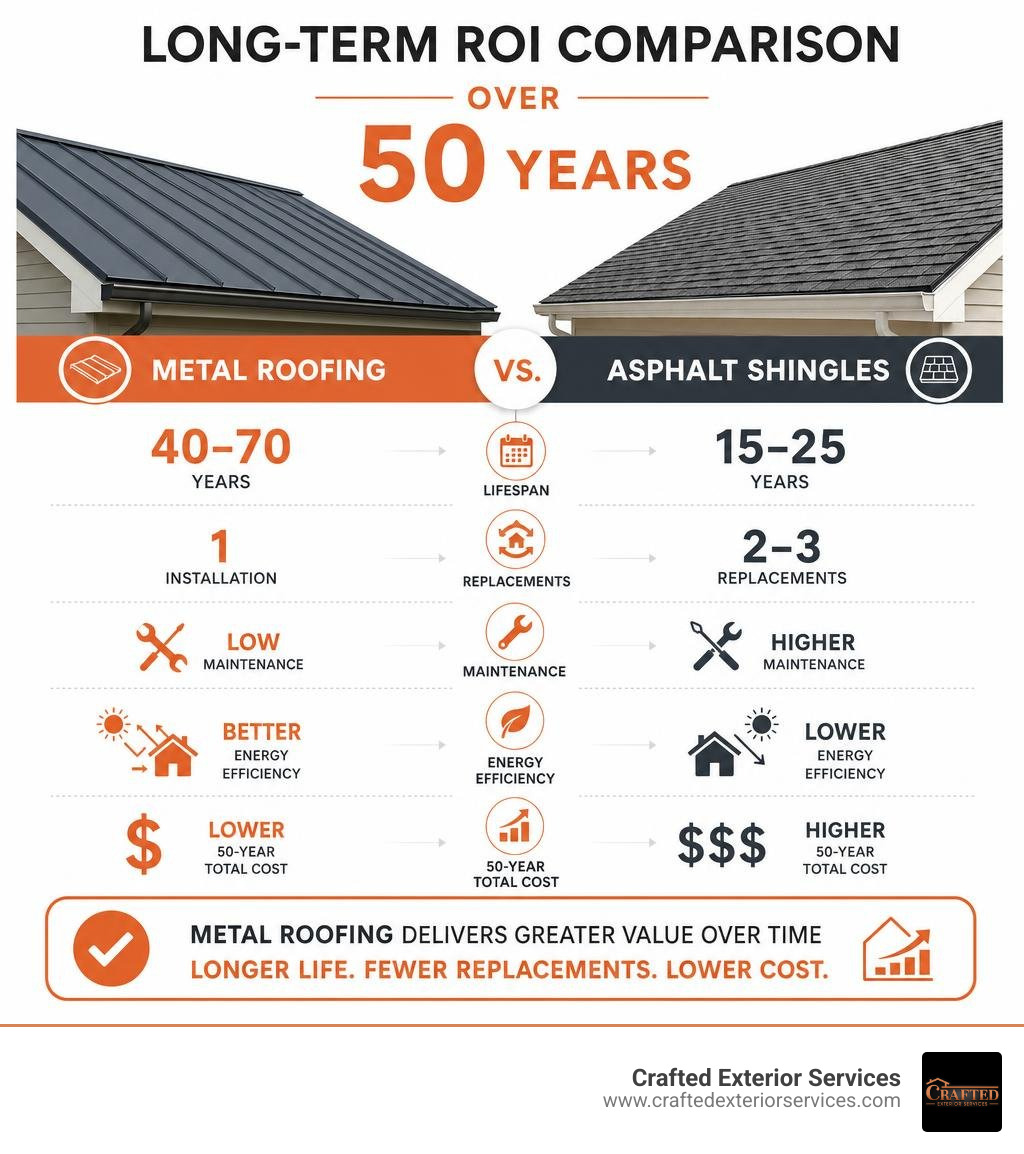
When evaluating how metal stacks up against traditional materials, the metrics speak for themselves. You can read our detailed breakdown on Asphalt Shingles vs Metal Roofs Which Is Better to see how the two materials compare over a long timeline.
| Performance Metric | Premium Metal Roofing | Traditional Asphalt Shingles |
|---|---|---|
| Typical Lifespan | 40 to 70+ Years | 15 to 25 Years |
| Wind Resistance Rating | Up to 140 mph (Standard) | Up to 110–130 mph |
| Maintenance Requirements | Minimal (Annual inspection/debris clearing) | Moderate (Algae treatment, shingle replacement) |
| Recyclability | 100% Recyclable | Landfill-bound |
| Average Summer Energy Savings | 10% to 25% Reduction in cooling bills | Standard heat absorption |
2. Access to Premium Materials and Custom Fabrication
When you hire a local metal roofer, you gain access to superior material supply chains and advanced fabrication techniques. Rather than relying on generic, pre-cut retail panels shipped across the country, a specialized local installer utilizes commercial-grade materials sourced from reputable regional suppliers.
High-Quality Materials and Regional Sourcing
For residential properties, we prioritize materials like Galvalume steel, aluminum, and copper accents. Galvalume steel, which features an aluminum-zinc alloy coating, offers exceptional corrosion resistance.
To ensure the highest quality, we source premium construction supplies and structural components from trusted regional partners. For example, working with local suppliers like WV Metal and utilizing top-tier regional distributors allows us to obtain premium-grade steel and engineered truss systems designed for local building loads.
Investing in a premium Standing Seam Metal Roofing system ensures your home is protected by a continuous, highly engineered metal barrier. If you are looking to match your home’s new aesthetic on smaller, secondary structures, you can learn how to coordinate your property’s look with our guide on How to Pick the Perfect Metal Shed Roof Without Losing Your Mind.
How a Local Metal Roofer Handles On-Site Panel Fabrication
One of the greatest advantages of working with a specialized local contractor is on-site roll-forming technology.
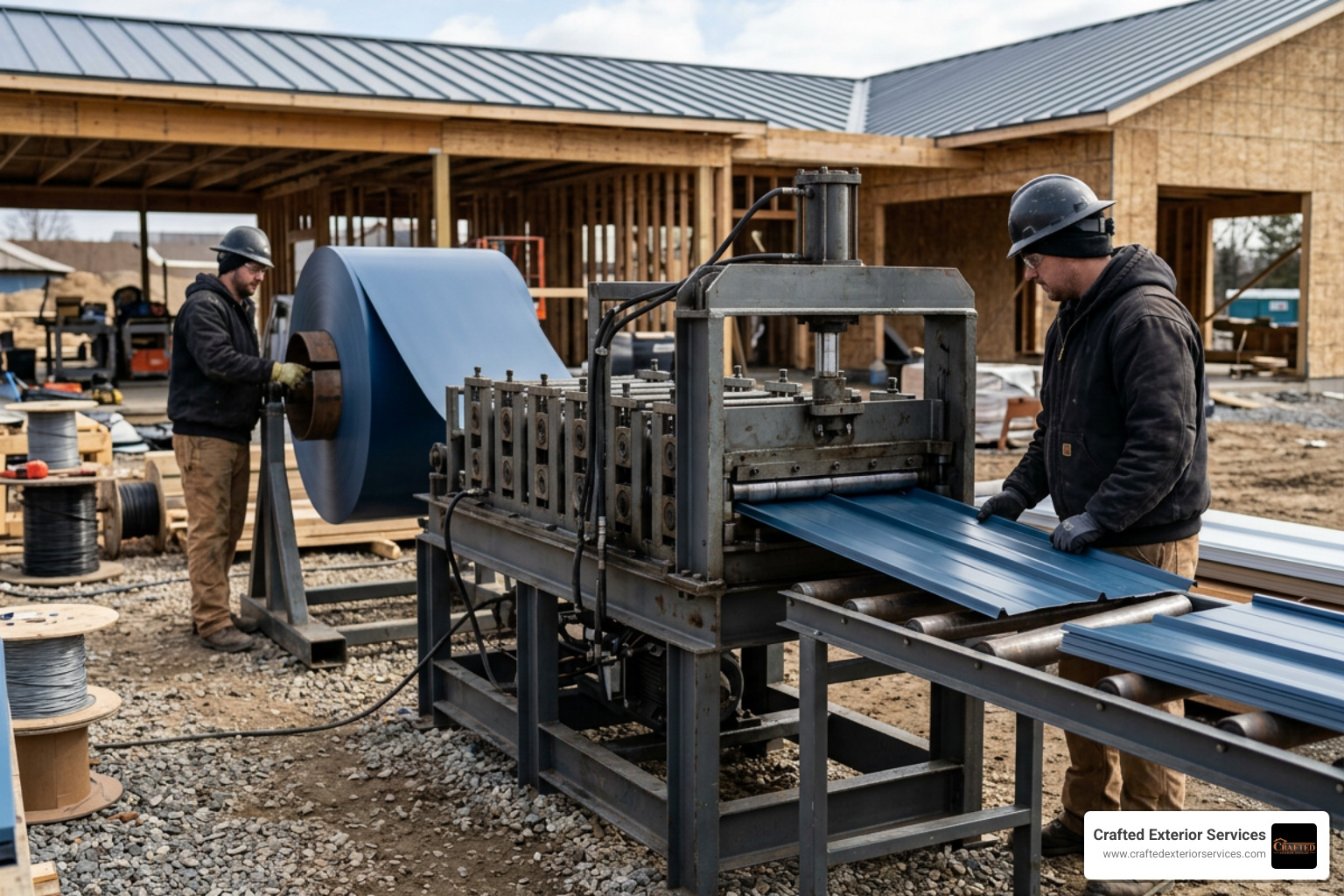
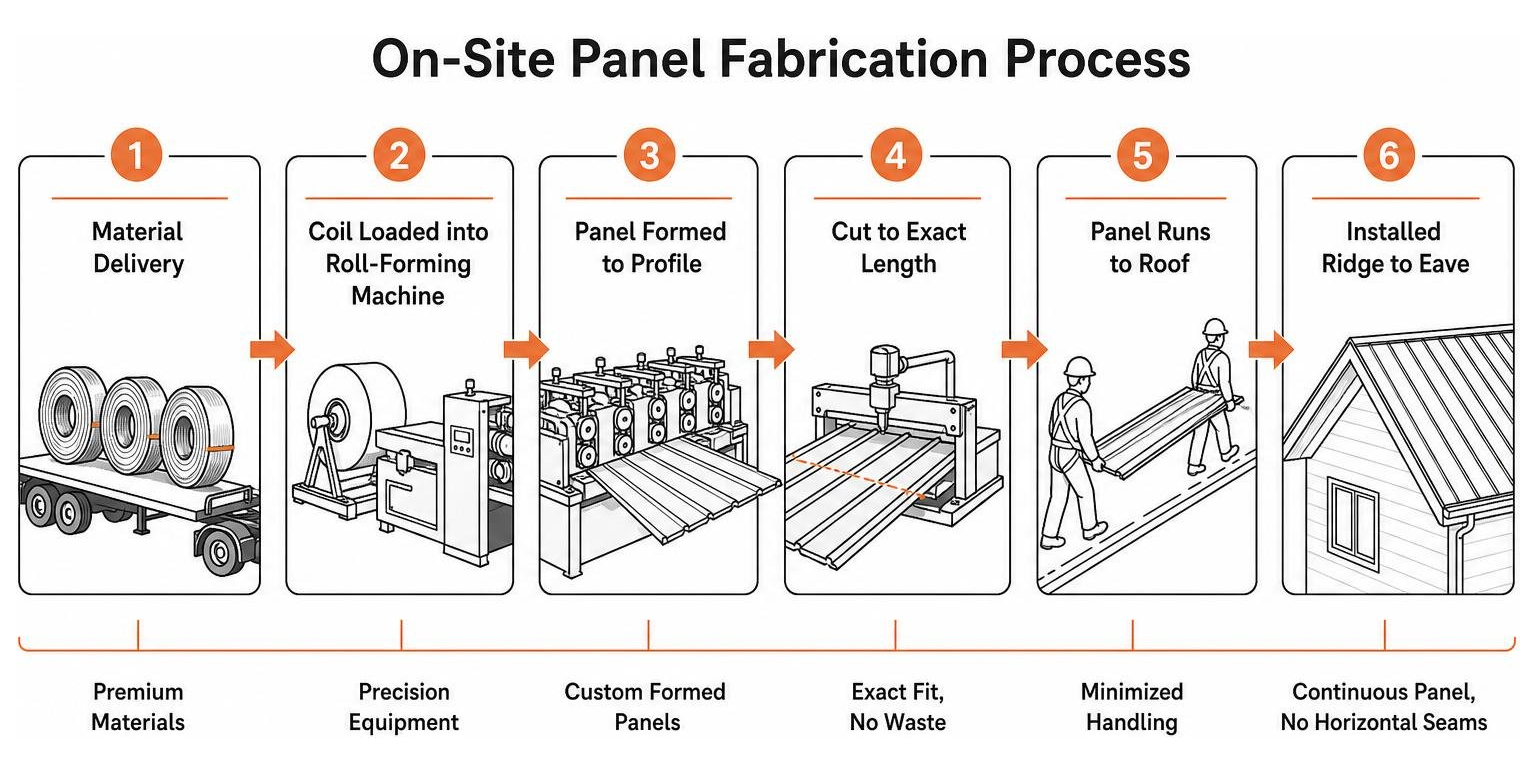
Instead of ordering pre-cut panels that must be pieced together, we bring a portable roll-forming machine directly to your property. We feed master coils of high-quality steel into the machine, which shapes and cuts the panels to the exact length of your roof slopes.
This custom fabrication process offers several critical benefits:
- Zero Horizontal Seams: Standard panels require overlapping joints on long slopes. On-site fabrication creates single, continuous panels from ridge to eave, eliminating horizontal seams.
- Leak Prevention: Because there are no horizontal joints, the primary entry points for water intrusion are completely eliminated.
- Flawless Fit: Every panel is tailored to the unique dimensions of your home, accommodating slight settling or architectural variations.
While DIY projects can be rewarding, roofing is highly technical. If you are considering a hands-on approach, you can read our realistic guide on How to DIY a Standing Seam Metal Roof Without Losing Your Mind to understand the specialized tools, safety risks, and physical demands involved.
Choosing the Right Metal Panel Profile and Gauge
The performance of your roof is heavily influenced by the profile and metal gauge you select.
- Standing Seam Panels: The gold standard for residential properties. These panels feature concealed fasteners. The seams snap together or are mechanically locked, hiding the screws beneath the metal surface to protect them from weather exposure.
- Ribbed and Corrugated Panels: These profiles use exposed fasteners, meaning screws are drilled directly through the face of the metal panel. While highly durable and cost-effective, they require routine maintenance to ensure the rubber washers around the screws do not degrade over time.
- Understanding Metal Gauges: Metal thickness is measured by gauge; counterintuitively, a lower number represents thicker steel. For premium residential installations, 24-gauge steel offers maximum dent and wind resistance. Utility applications or budget-conscious projects may utilize 28-gauge panels.
To protect your investment, we use high-performance finishes like Kynar 500 (PVDF) resin coatings. These finishes offer superior resistance to chalking, fading, and UV degradation, keeping your roof vibrant for decades.
We also source high-quality building materials from trusted manufacturers like CertainTeed to ensure your roof is built using the most durable components available in the Mid-Atlantic.
3. Seamless Installation, Warranties, and Local Accountability
A metal roof is only as good as the hands that install it. National franchise networks often subcontract their labor to the lowest bidder, leading to inconsistent quality.
As a local, non-franchise team, we take pride in our workmanship and maintain strict quality control standards. We use manufacturer-approved products and certified installation techniques to ensure your roof performs flawlessly for decades.
Understanding Labor Warranties vs. Manufacturer Material Warranties
When investing in a new roof, it is vital to understand the difference between the two primary types of warranties:
- Manufacturer Material Warranties: These cover defects in the metal panels, paint finishes, and coatings. For example, high-quality painted panels often come with a 40-year manufacturer warranty against chalking and fading.
- Workmanship Warranties: These are provided directly by your installer and cover the labor and installation methods. A material warranty is useless if a leak is caused by an improperly installed flashing. Our local team backs our installations with robust workmanship warranties, giving you peace of mind that we stand behind our labor.
If you are replacing an aging roof, you might wonder if you can save on labor costs by skipping the tear-off process. We break down the structural pros, cons, and building code limits of this approach in our article: Should You Put a Metal Roof Directly Over Your Old Asphalt Shingles.
Understanding Metal Roofing Warranties and Financing
A premium metal roof is designed to last 50+ years, making it a highly cost-effective choice over its lifespan.
To help make this permanent protection accessible, we offer flexible payment options, including zero-down financing programs. This allows you to protect your home immediately without depleting your savings.
Additionally, a new metal roof can save you money on your homeowner’s insurance. Many insurance carriers offer premium discounts for homes with Class 4 impact-resistant metal roofs because they are highly resistant to hail damage, high winds, and wildfires.
Why You Need a Professional Metal Roofer for Your Home
While many home improvement projects can be tackled over a weekend, metal roof installation is a highly specialized trade that requires professional expertise.
Installing metal panels requires specialized tools, including hand seamers, mechanical seamers, heavy-duty metal shears, and comprehensive fall-protection gear. Working on sloped, smooth metal surfaces is inherently hazardous, requiring strict compliance with OSHA safety protocols to protect both the installation crew and your property.
Precision is critical when managing complex flashing details, valleys, sidewall integrations, and chimney penetrations. Unlike asphalt shingles, which can be easily cut and layered, metal panels must be meticulously measured, bent, and sealed to prevent water intrusion.
If you want to understand the step-by-step process of working with metal on smaller projects, check out our Metal Roof Lean To Step by Step Installation Guide for DIYers.
What to Ask Before Hiring a Metal Roofer
Before signing a contract, protect your home by asking potential installers these essential questions:
- Are you licensed and fully insured? Always verify that the contractor carries comprehensive general liability and workers’ compensation insurance.
- Can you provide local references? A reputable local contractor should gladly share case studies and references from completed projects in your immediate area, demonstrating their track record of successful installations.
- What workmanship warranties do you offer? Ensure the labor guarantee is clearly documented in writing.
- Do you have experience in my specific neighborhood? Confirming their local presence ensures they are familiar with local municipal permitting and regional weather challenges.
Our team proudly serves communities across the region, providing top-tier Roofing Services in Hagerstown MD and dedicated Roofing Services in Chambersburg PA.
Frequently Asked Questions About Metal Roofing
How long does a metal roof last compared to asphalt shingles?
A professionally installed metal roof will last 40 to 70 years, which is two to three times longer than traditional asphalt shingles (typically 15 to 25 years). Beyond their impressive durability, metal roofs are highly sustainable, offering exceptional energy efficiency and being 100% recyclable at the end of their lifespan.
Is a metal roof noisy when it rains or storms?
No. This is a common misconception stemming from old barns with exposed metal framing. In residential installations, the metal panels are installed over solid wood decking and a high-density underlayment. This solid barrier absorbs sound waves, making a metal roof just as quiet as an asphalt shingle roof during heavy rain and storms.
Can you install a metal roof directly over existing shingles?
In many cases, yes. Installing metal over a single layer of existing shingles can save on tear-off costs and keep waste out of landfills. However, this depends on local building codes (which generally limit roofs to a maximum of two layers) and the structural condition of your roof deck. We always perform a comprehensive inspection to ensure your roof deck is dry, stable, and structurally sound before recommending this approach.
Conclusion
Investing in a new roof is a major decision, and choosing a local metal roofer ensures you receive the regional expertise, custom fabrication, and direct accountability your home deserves.
At Crafted Exterior Services, we are proud to be a locally owned, non-franchise team. We combine manufacturer-approved products with flexible, zero-down financing and comprehensive insurance coverage to deliver an exceptional, stress-free home improvement experience.
Ready to protect your home with a roof built to last a lifetime? Contact Crafted Exterior Services today to schedule your free estimate, or explore our premium Metal Roofing systems to find the perfect style for your home.